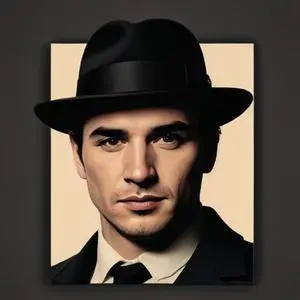
Pretty Boy Floyd: The Infamous Bank Robber with a Robin Hood Complex
A Life of Crime and Controversy
Pretty Boy Floyd, born Charles Arthur Floyd, was a notorious American bank robber who captured the nation's attention in the 1930s with his daring heists and alleged acts of kindness. His criminal exploits, which included allegedly burning mortgage documents to free people from their debts, earned him a Robin Hood-like reputation, despite being pursued by law enforcement.
Early Life and Criminal Beginnings
Born on February 3, 1904, in Adairsville, Georgia, Floyd grew up in Akins, Oklahoma, after his family moved there in 1911. His life of crime began at the age of 18, when he was arrested for stealing $3.50 (equivalent to $50 in 2023) from a local post office. This was followed by a payroll robbery in St. Louis, Missouri, in 1925, which landed him a five-year prison sentence. Floyd served three and a half years before being granted parole.
The Rise of Pretty Boy Floyd
After his release from prison, Floyd partnered with criminals in the Kansas City underworld and embarked on a series of bank robberies. It was during this period that he acquired the nickname "Pretty Boy," although accounts of its origin vary. One story suggests that it was given to him by Orville Drake, who admired his stylish appearance, including his signature white button-up dress shirts and slacks.
A Folk Hero or Notorious Criminal?
Floyd's criminal exploits and alleged acts of kindness, such as destroying mortgage documents, made him a folk hero of sorts. However, his actions were also seen as a threat to public safety, and he was pursued by law enforcement agencies, including the Bureau of Investigation (BOI), led by
Melvin Purvis. Floyd's fate was sealed on October 22, 1934, when he was shot and killed by a group of BOI agents, including local officers Robert Pete Pyle and George Curran.
Legacy and Impact on Popular Culture
Pretty Boy Floyd's story has continued to fascinate Americans, inspiring numerous books, films, and songs. He is often portrayed as a tragic figure, a victim of the hard times of the Great Depression, and an anti-hero who robbed from the rich to give to the poor. Floyd's legacy serves as a reminder of the complexities of human nature and the blurred lines between good and evil.
Trivia and Fun Facts
- Floyd's family moved to Oklahoma when he was seven years old.
- He was sentenced to five years in prison for the 1925 payroll robbery.
- Floyd was killed at the age of 30.
- His nickname "Pretty Boy" was later shortened to "P."
In Conclusion
Pretty Boy Floyd's life was a complex mix of crime, controversy, and kindness. While his actions were illegal and often dangerous, they also sparked a national debate about the role of law enforcement and the treatment of the poor during the Great Depression. Today, he remains an fascinating figure, a symbol of both the darker and more compassionate aspects of human nature.
FAQ
What was Pretty Boy Floyds criminal career like?
Pretty Boy Floyd was a notorious American gangster who engaged in a life of crime, including bank robbery, extortion, and murder. His criminal exploits made him a household name during the Great Depression.
How did Pretty Boy Floyds criminal activities impact American society?
Pretty Boy Floyds criminal activities captured the attention of the American public, inspiring a wave of media fascination with gangsters and outlaws. His exploits also led to increased concern about crime and its impact on society.
What was Pretty Boy Floyds relationship like with other gangsters?
Pretty Boy Floyd was known for his involvement with other notorious gangsters, including John Dillinger and Baby Face Nelson. His associations with these criminals contributed to his notoriety and fueled public fascination with his exploits.
How did Pretty Boy Floyds life end?
Pretty Boy Floyd was killed in a shootout with FBI agents in 1934. His death marked the end of an era of gangsterism and brought a sense of closure to a nation fascinated by his criminal exploits.
What is Pretty Boy Floyds lasting legacy?
Pretty Boy Floyds legacy is complex, representing both the allure of crime and the consequences of a life of violence. His story continues to captivate audiences, inspiring books, films, and other works that reflect on the darker side of human nature.