


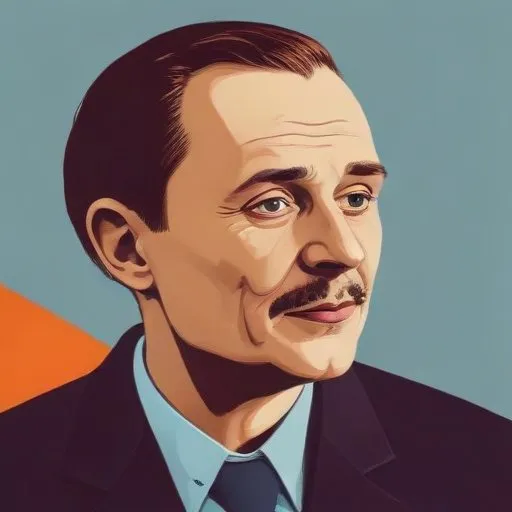
A pioneering Estonian poet and educator who introduced modernist poetry to Estonia and developed innovative teaching methods. His works explored themes of nature, identity, and social change.
Priidu Beier, also known by his pseudonyms Matti Mogui and Pierre Bezuhov, is a renowned Estonian poet and teacher, celebrated for his contributions to the world of literature and art. He is recognized for his works as a poet, editor, and member of the Estonian Writers Union and Estonian Literary Society.
Beier's literary career took off in the 1980s, with the publication of his poetry collection, Vastus, in 1986. This was followed by Tulikiri in 1989, Mustil pevil in 1991, and Femme fatale in 1997. His poetry is known for its unique style, which often explores themes of love, nature, and human existence.
In addition to his writing, Beier has also made significant contributions to the field of education. He has taught art history at the Hugo Treffner Gymnasium in Tartu, Estonia, and has been involved in the editing of several publications. Between 1984 and 1990, he served as the Head of the Pedagogical arts sector of Tartu Art Museum, where he worked to promote art education and appreciation in the region.
Beier's work has been recognized with several awards and honors. In 2007, he presented a poetry collection in Tartu with Kerti Tergem, a testament to his continued contributions to the world of literature.
According to Tartu Postimees, Beier lives a simple, monastic life, dedicated to his craft and his passion for teaching. His philosophy is one of humility and dedication, reflected in his quiet, introspective approach to life.
Through his work, Priidu Beier has left an indelible mark on Estonian literature and art, inspiring generations of writers, artists, and educators. His legacy continues to grow, as his poetry and teachings continue to inspire and educate people around the world.
85 Years Old
Estonian poet, philosopher, and critic known for blending Eastern and Western thought in his work, exploring themes of nature, culture, and human existence. His writing often weaves together poetry, essay, and philosophy.
Born in 1883
Estonian poet and author, known for her lyrical and introspective works that explored themes of love, nature, and the human condition. Her poetry is characterized by its musicality and emotional depth.
Born in 1909
A renowned Estonian thinker who merged philosophy and theology to explore the human condition, producing influential works on existentialism and phenomenology.
