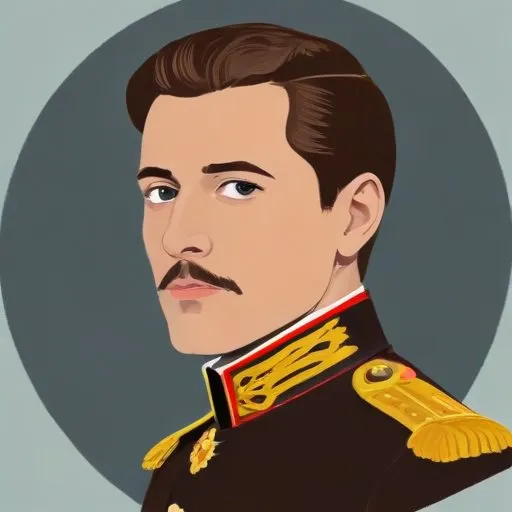
Prince Frederick Henry Eugen of Anhalt-Dessau: The Illustrious Military Strategist
A Life of Distinction in the Prussian, Austrian, and Saxon Armies
Prince Frederick Henry Eugen of Anhalt-Dessau is renowned for his exceptional military prowess, which earned him a distinguished position in the Prussian, Austrian, and Saxon armies. This German prince of the House of Ascania from the Anhalt-Dessau branch made a lasting impact on the world of warfare, leaving behind a legacy that still inspires military historians and strategists today.
Early Life and Military Beginnings
Born on December 27, 1705, in Dessau, Prince Frederick Henry Eugen joined the Prussian army at the tender age of 12. This early start set the tone for his remarkable military career, which spanned over five decades. In 1717, he began his Prussian tenure, eventually rising to become the Chief of the Corps of the Prussian Hussars regiment No. 1 regiment of Pferde, a position he held from 1733 to 1739.
Austrian and Saxon Interlude
In 1743, Prince Frederick Henry Eugen left the Prussian service to join the Austrian army under the command of Prince Charles Alexander of Lorraine. He served as a volunteer on the Rhine, further honing his military skills. Later, in 1746, he joined the army of the Electorate of Saxony, where he became the Governor of Wittenberg and eventually rose to the rank of Generalfeldmarschall.
Leadership and Legacy
Throughout his illustrious military career, Prince Frederick Henry Eugen demonstrated exemplary leadership, earning the respect of his contemporaries and the admiration of history. His extensive experience in multiple armies enabled him to develop a unique understanding of warfare, which he employed to great effect in various campaigns.
Personal Milestones and Key Life Events
Despite his military accomplishments, Prince Frederick Henry Eugen never married or had children. He also refrained from participating in the government of Anhalt-Dessau, choosing instead to focus on his military pursuits. This focus allowed him to leave an indelible mark on the world of warfare.
Legacy and Historical Context
Prince Frederick Henry Eugen's remarkable military career serves as a testament to his unwavering dedication and unrelenting passion for the art of warfare. His contributions to the Prussian, Austrian, and Saxon armies continue to inspire historians and military strategists today, cementing his place in the annals of history.
Comparative Analysis with Contemporaries
When compared to his contemporaries, Prince Frederick Henry Eugen's military prowess stands out for its versatility and range. His ability to adapt to different armies and commands demonstrates a level of flexibility and strategic thinking that few could match.
Philosophical Contributions and Beliefs
While little is known about Prince Frederick Henry Eugen's philosophical beliefs, his military career speaks volumes about his values and principles. His unwavering commitment to his craft, coupled with his ability to adapt and innovate, demonstrates a deep understanding of the importance of strategy and leadership in warfare.
Influence on Modern Society
Prince Frederick Henry Eugen's impact on modern society is largely felt in the realm of military strategy and tactics. His contributions to the development of modern warfare continue to shape the way armies operate today, making him a crucial figure in the evolution of military thought.
Final Years and Legacy
Prince Frederick Henry Eugen of Anhalt-Dessau passed away on March 2, 1781, in Dessau, leaving behind a legacy that continues to inspire and educate military historians and strategists. His remarkable life serves as a testament to the power of dedication, innovation, and strategic thinking, ensuring his place in the annals of history.
FAQ
What was Prince Frederick Henry Eugen of Anhalt-Dessaus role in the House of Ascania?
Prince Frederick Henry Eugen of Anhalt-Dessau was a member of the House of Ascania, a German noble family that played an important role in European politics and history. As a prince, he held significant influence and power within the family and the region.
What were Prince Frederick Henry Eugens military achievements?
Prince Frederick Henry Eugen had a distinguished military career, serving as a general in the Prussian army. He fought in several important battles, including the War of the Austrian Succession, and his military skills and strategic thinking earned him recognition and respect.
What was Prince Frederick Henry Eugens role in the Enlightenment?
Prince Frederick Henry Eugen was a patron of the arts and sciences, and he played an important role in promoting the Enlightenment values of reason, tolerance, and progress. He supported several prominent intellectuals and writers, and his court became a center of intellectual and artistic activity.
What was Prince Frederick Henry Eugens legacy in the region of Anhalt-Dessau?
Prince Frederick Henry Eugens legacy in the region of Anhalt-Dessau is significant, as he played an important role in promoting the regions economic and cultural development. He encouraged trade and commerce, and his investments in infrastructure and education helped to raise the regions profile.
What was Prince Frederick Henry Eugens relationship with other European rulers?
Prince Frederick Henry Eugen had close relationships with other European rulers, including King Frederick the Great of Prussia. He was a skilled diplomat and strategist, and his alliances and friendships helped to secure his familys power and influence.