


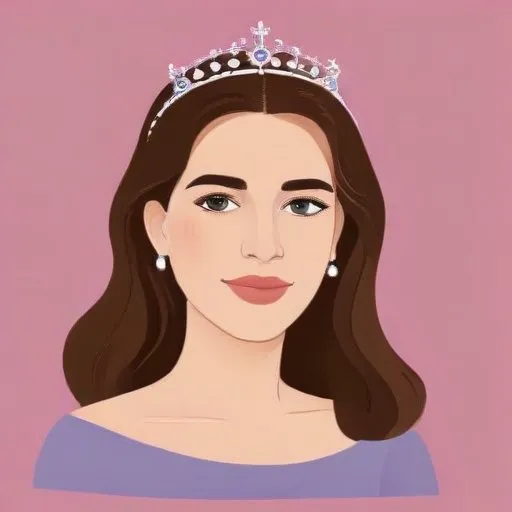
A member of the Greek and Danish royal families, she was a humanitarian and philanthropist, particularly dedicated to helping the poor and marginalized. She was also a skilled painter and artist.
Princess Katherine of Greece and Denmark was a member of the Greek and Danish royal families, known for her exquisite artistic talents and her experiences of living in exile. As the youngest child of King Constantine I of Greece and Princess Sophia of Prussia, Katherine's life was marked by royal duties, artistic pursuits, and a series of challenges that tested her resilience.
Katherine was born on May 4, 1913, in the Royal Palace in Athens, just weeks after her paternal grandfather, King George I of Greece, was assassinated. Her baptism on June 14, 1913, was a grand affair, with an impressive list of godparents, including Olga Constantinovna, the Dowager Queen of Greece, Alexandra, the Dowager Queen of the United Kingdom, and George V, the King of the United Kingdom.
Katherine's life took a dramatic turn when her father abdicated in 1917, and she and her parents were exiled to Switzerland. Although they were briefly reinstated following the death of her brother Alexander in 1920, her father's second abdication in 1922 led to a more permanent exile, first in Sicily and later in Florence, Italy. It was during this period that Katherine developed her passion for painting, which would become a lifelong passion.
Katherine's artistic talents flourished in Florence, where she honed her skills as a painter. Her art became a source of comfort and solace during the tumultuous years of exile. She also experienced personal milestones, including her Marriage to Major Richard Brandram in 1947, which led to her being styled as Lady Katherine Brandram.
Katherine's life serves as a testament to the resilience of the human spirit in the face of adversity. Her experiences of living in exile, coupled with her artistic pursuits, offer a unique perspective on the challenges faced by royal families during times of turmoil. Her story inspires us to find solace in our passions and to persevere in the face of uncertainty.
Katherine's life was marked by the tumultuous events of the early 20th century, including the Balkan Wars and the Second World War. Her experiences offer a personal perspective on the broader historical context, highlighting the human cost of conflict and the importance of family and community.
Katherine's life, marked by both royal duties and artistic expression, serves as a testament to the power of resilience and the importance of pursuing one's passions. Her story offers a unique perspective on the experiences of royal families during times of turmoil and inspires us to find solace in our own creative pursuits.
Born in 1901
King of Greece from 1947 to 1964, known for his efforts to modernize and stabilize the country during a tumultuous post-war period. He played a key role in maintaining Greece's sovereignty and promoting economic growth.
86 Years Old
The last king of Greece, reigning from 1964 to 1973, known for his tumultuous rule and eventual exile after a military coup. He's a symbol of Greece's transition from monarchy to democracy.
88 Years Old
The wife of King Juan Carlos I, she reigned as queen consort of Spain from 1975 to 2014, known for her charitable work and support of the arts. She has been a unifying figure for the Spanish people.
88 Years Old
The former King of Spain who reigned from 1975 to 2014, known for transitioning the country from dictatorship to democracy and playing a key role in preventing a military coup in 1981.
Born in 1921
The husband of Queen Elizabeth II, supporting her reign and carrying out numerous philanthropic and ceremonial duties, while also advocating for environmental conservation and education.
