


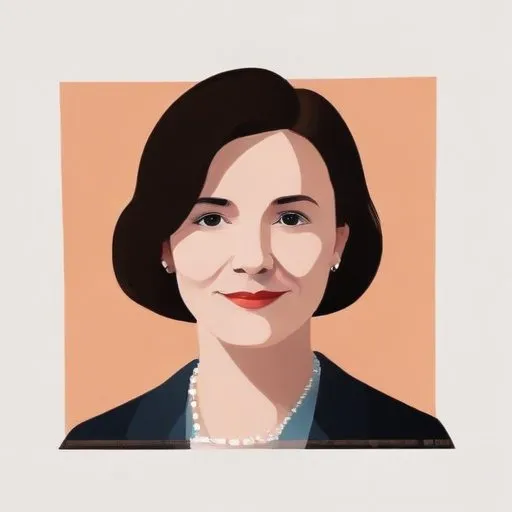
Founded a school for African American girls in 1831, defying segregation laws and facing violent protests, paving the way for future generations of women and minorities in education.
Prudence Crandall was a trailblazing American schoolteacher and activist who made history by establishing the first school for African American girls in the United States. In 1832, she defied societal norms by admitting Sarah Harris, a 20-year-old African American woman, to her Canterbury Female Boarding School in Connecticut, creating the first integrated classroom in the country.
Born on September 3, 1803, in Carpenters Mills, Rhode Island, Prudence Crandall was the daughter of Pardon and Esther Carpenter Crandall, a Quaker couple. She grew up in Canterbury, Connecticut, where her father moved the family when she was around 10 years old. Her father, dissatisfied with the local public school, ensured that Prudence received a quality education by enrolling her in the Black Hill Quaker School in Plainfield, Connecticut.
When Prudence Crandall admitted Sarah Harris to her school, she was met with resistance from the local community. Parents of white students began to withdraw their children, and Crandall was arrested and spent a night in jail. Despite the backlash, she refused to back down, and instead, decided to dedicate her school to educating African American girls. This bold move led to repeated trials, violence from the townspeople, and eventually, the closure of her school.
Although Crandall was forced to leave Connecticut and never returned, her courageous stand did not go unnoticed. Years later, the Connecticut legislature, with the support of Mark Twain, a resident of Hartford, passed a resolution honoring Crandall and providing her with a pension. Twain even offered to buy her former Canterbury home for her retirement, but she declined.
In 1995, the Connecticut General Assembly named Prudence Crandall the State Heroine of Connecticut, a testament to her pioneering spirit and unwavering commitment to education and equality.
"I will never abandon my principles, even if it means standing alone."
Prudence Crandall's bravery and determination paved the way for future generations of educators and activists to fight for education and equality. Her legacy serves as a powerful reminder of the importance of standing up against injustice and discrimination, even in the face of adversity.
Born in 1811
Wrote influential abolitionist novels, including "Uncle Tom's Cabin", which humanized the horrors of slavery and fueled the anti-slavery movement.
Born in 1805
Founded an influential abolitionist newspaper, The Liberator, to advocate for the immediate emancipation of slaves. Known for his radical and uncompromising stance against slavery.
Born in 1800
Abolitionist who led the raid on Harpers Ferry, a pivotal event that helped spark the American Civil War, fighting to end slavery through radical action.
Born in 1820
Pioneering figure in the women's suffrage movement, fighting for women's right to vote and own property. Her tireless efforts led to significant advancements in women's rights.
Born in 1815
Pioneering women's rights activist who led the women's suffrage movement, fighting for women's right to vote and own property.
Born in 1793
A pioneering Quaker minister and women's rights activist who fought for abolition and women's suffrage, playing a key role in the Seneca Falls Convention.
