


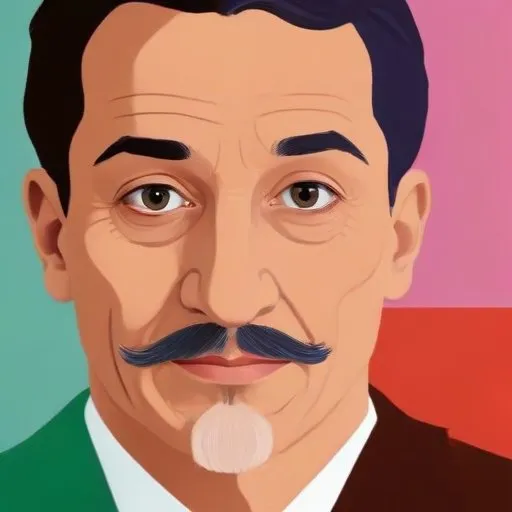
A Hungarian writer and essayist, known for his unique blend of fiction and non-fiction, exploring themes of identity, history, and politics in his works. His writing often blends genres, creating a distinctive and thought-provoking style.
Péter Esterházy, the celebrated Hungarian writer, left an indelible mark on 20th-century literature. His works, often woven with intricate historical narratives, intellectual curiosity, and a dash of humor, have captivated readers worldwide.
Born on April 14, 1950, in Budapest, Hungary, Esterházy was the eldest son of Mátyás Esterházy de Galántha, a count until the abolition of titles and ranks in 1947. His paternal grandfather, Count Mric Esterházy, briefly served as Prime Minister of Hungary in 1917. This rich heritage would later influence his writing, as he explored the complexities of Hungary's historical past.
Esterházy pursued a degree in mathematics, but it was during the 1970s that he began to explore his passion for writing. His early works, though not widely recognized, laid the foundation for his future literary successes.
Esterházy's magnum opus, Harmonia Caelestis (2000), or Celestial Harmonies, is a sweeping family saga that chronicles the rise and fall of his aristocratic ancestors during the Austro-Hungarian Empire and Communist era. This novel solidified his reputation as a masterful storyteller and earned him international acclaim.
His subsequent work, Javított kiadás (2002), or Revised Edition, serves as an appendix to Harmonia Caelestis, exploring the revelation that his father was an informant for the secret police during the communist regime. This autobiographical work showcases Esterházy's unflinching examination of his own family's history and the complexities of life under communism.
Esterházy's writing is characterized by a postmodernist approach, blending historical accuracy with a vibrant, electric prose. His sentences are rich in detail, often jumping between past and present, and infused with a wry humor. Through his works, he tackles the dualities of Hungarian identity, the trauma of communism, and the complexities of family dynamics.
Esterházy's contributions to literature have been recognized with numerous awards, including the Friedrich-Gundolf-Preis (1999) and the Peace Prize of the German Book Trade (2004). His works have been translated into multiple languages, cementing his status as a prominent figure in Hungarian and Central European literature.
Despite the opportunity to reclaim nationalized family assets after the regime change in 1989, Esterházy refused, opting instead to preserve the moral integrity of his family's legacy. This principled stance reflects his commitment to artistic honesty and his dedication to chronicling the complexities of Hungarian history.
Péter Esterházy's passing on July 14, 2016, left a void in the literary world, but his legacy continues to inspire new generations of writers and readers. His works remain a testament to the power of storytelling, offering a rich tapestry of Hungarian history, culture, and identity.
72 Years Old
A Hungarian literary mastermind, celebrated for his complex, lyrical, and often surreal novels that explore the human condition, blending philosophical and psychological insights with a unique narrative style.
96 Years Old
A Hungarian writer who won the Nobel Prize in Literature in 2002 for his semi-autobiographical novels about the Holocaust, exploring the psychological and philosophical implications of survival. His works are known for their complex, lyrical prose and nuanced exploration of humanity.
83 Years Old
A Hungarian literary giant, renowned for his sprawling, introspective novels and plays that explore the human condition, love, and the search for identity.
93 Years Old
A prominent Hungarian sociologist and writer, known for his influential works on totalitarianism and human rights, as well as his activism against communist regimes.
76 Years Old
A Hungarian literary mastermind, renowned for crafting captivating novels, screenplays, and translations that have captivated audiences worldwide. His works often explore the human condition, love, and social commentary.
76 Years Old
A Hungarian writer and essayist, known for his unique blend of fiction and non-fiction, exploring themes of identity, history, and politics in his works. His writing often blends genres, creating a distinctive and thought-provoking style.
90 Years Old
A Hungarian-Swiss novelist known for her dark, provocative, and psychologically complex fiction that explores themes of identity, morality, and the human condition. Her works often blur the lines between reality and fiction, creating a sense of unease and uncertainty in readers.
