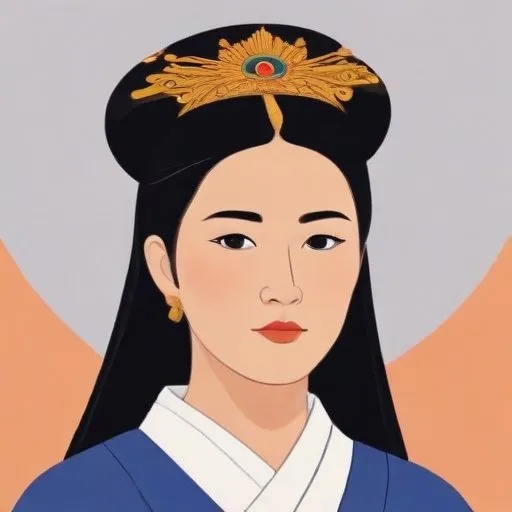
Queen Dangyeong: The Untold Story of a Deposed Monarch
A Brief Reign and a Lasting Legacy
Queen Dangyeong, a member of the Geochang Shin clan, is remembered as the wife and first queen consort of Yi Yeok, King Jungjong, the 11th Joseon monarch. Although her reign was short-lived, lasting only seven days in September 1506, her impact on Korean history is still felt today.
Family Ties and Early Life
Born on February 7, 1487, during the reign of King Seongjong, Queen Dangyeong's family played a significant role in shaping her future. Her father, Shin Sugeun, was a member of the Geochang Shin clan, and her paternal aunt, Queen Jeinwondeok, was King Yeonsangun's primary consort. Through her maternal grandmother, Lady Shin was a great-great-granddaughter of Princess Gyeongjeong.
Rise to Prominence and Royal Marriage
In 1499, at the age of 13, Queen Dangyeong married the 12-year-old Grand Prince Jinseong, King Seongjong's second son and younger half-brother to King Yeonsan. This union solidified her position as the Princess Consort. Her mother was granted the royal title of Internal Princess Consort Cheongwon, and her father received the royal title of Internal Prince Ikchang.
The Fall from Power
In 1506, King Yeonsan was deposed, and on the same day, Queen Dangyeong was deposed as well, earning her the title of Deposed Queen Shin. The circumstances surrounding her fall from power remain shrouded in mystery.
Influence on Modern Society
Despite her brief reign, Queen Dangyeong's legacy extends beyond the palace walls. Her story serves as a testament to the complexities of royal politics and the sometimes brutal nature of power struggles. Her experience also highlights the limited agency and autonomy of women in positions of power during the Joseon dynasty.
Personal Milestones and Key Life Events
- February 7, 1487: Born during the reign of King Seongjong
- 1499: Married Grand Prince Jinseong at the age of 13
- 1506: Became Queen Consort for seven days
- 1506: Deposed as Queen and given the title Deposed Queen Shin
- December 27, 1557: Passed away
Philosophical Contributions and Beliefs
While there is limited information available on Queen Dangyeong's personal beliefs and philosophical contributions, her life serves as a testament to the resilience and adaptability of women in the face of adversity.
Legacy and Historical Context
Queen Dangyeong's story is a poignant reminder of the intricate web of relationships and alliances that defined the Joseon dynasty. Her legacy serves as a counterpoint to the grand narratives of Korean history, highlighting the often-overlooked experiences of women in power.
Trivia and Fun Facts
- Queen Dangyeong was a fourth cousin to King Jungjong through her father's side
- She was also a third cousin to King Jungjong through her maternal grandfather
By examining Queen Dangyeong's life, we gain a deeper understanding of the complexities of royal politics and the enduring impact of women on Korean history.
FAQ
Who was Queen Dangyeongs husband, and what was their marriage like?
Queen Dangyeong was the wife of King Jungjong of Joseon, the 11th ruler of the Joseon dynasty in Korea. Little is known about their marriage, but it is believed to have been a strategic alliance between the royal family and the queens family.
What was Queen Dangyeongs role in the Joseon court?
Queen Dangyeong served as queen consort from 1506 to 1515, supporting her husband, King Jungjong, in his duties and serving as a symbol of the royal family.
What is known about Queen Dangyeongs family background?
Queen Dangyeong was born into the Shin clan, a prominent Korean noble family. Her father, Shin Su-geun, was a high-ranking government official.
What was Queen Dangyeongs relationship with her son, King Myeongjong?
Queen Dangyeongs son, King Myeongjong, succeeded his father, King Jungjong, as the 13th ruler of the Joseon dynasty. The relationship between mother and son is not well-documented, but it is believed to have been close and supportive.
How is Queen Dangyeong remembered in Korean history?
Queen Dangyeong is remembered as a devoted queen consort and mother, supporting her husband and son in their roles and duties. She is celebrated as a symbol of the royal family and a contributor to the stability of the Joseon dynasty.