


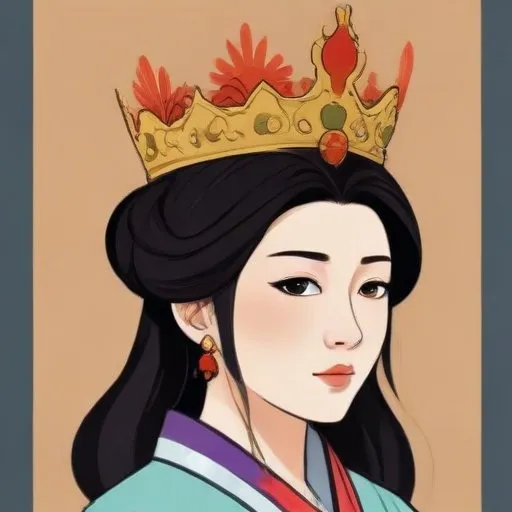
A 6th-century queen of the Silla kingdom, known for her diplomatic efforts to form an alliance with the Tang Dynasty of China, which led to the unification of the three kingdoms of Korea. She played a crucial role in shaping Korea's history and culture.
Known for being the wife of Gojong, the 26th king of the Joseon Dynasty, Queen Yun is an iconic figure in Korean history, celebrated for her unwavering dedication to her country and people. Her remarkable life, spanning over seven decades, is a testament to her unshakeable spirit and commitment to Korea's prosperity.
Born in 1854, Queen Yun was chosen as the royal consort at the tender age of 12. Despite her young age, she demonstrated remarkable poise and maturity, eventually becoming the queen dowager in 1873. Throughout her reign, she worked tirelessly to promote education, healthcare, and women's empowerment, earning the respect and admiration of the Korean people.
Queen Yun's life was not without its challenges. She faced numerous hardships, including the Japanese colonization of Korea in 1910, which led to the eventual demise of the Joseon Dynasty. Despite these tribulations, she remained steadfast, continuing to work towards Korea's independence and restoration.
Queen Yun's unwavering dedication to her country has left an indelible mark on Korean history. Her tireless efforts towards education, cultural preservation, and women's empowerment have inspired countless individuals, cementing her status as a national heroine.
Today, Queen Yun's legacy extends beyond the borders of Korea, serving as a beacon of inspiration for people around the world. Her remarkable life is a testament to the power of compassion, perseverance, and devotion, reminding us that even in the darkest of times, hope and determination can lead to a brighter future.
Queen Yun's extraordinary life serves as a shining example of dedication, compassion, and resilience. Her remarkable achievements have left an indelible mark on Korean history, earning her a revered place in the hearts of the Korean people. As we reflect on her extraordinary journey, we are reminded that even the most ordinary lives can lead to extraordinary legacies.
Born in 1397
Creator of the Korean alphabet, Hangul, and a visionary leader who promoted education, science, and the arts, transforming Korea into a cultural and economic powerhouse.
Born in 1367
The third king of the Joseon Dynasty, he's known for establishing a strong and efficient government, reforming the tax system, and creating a professional military. He's also infamous for his ruthless purge of officials who opposed him.
Born in 1441
The seventh king of the Joseon Dynasty, he's known for being deposed and exiled at a young age, leading a tragic and short-lived reign. His story has been immortalized in Korean folklore and drama.
