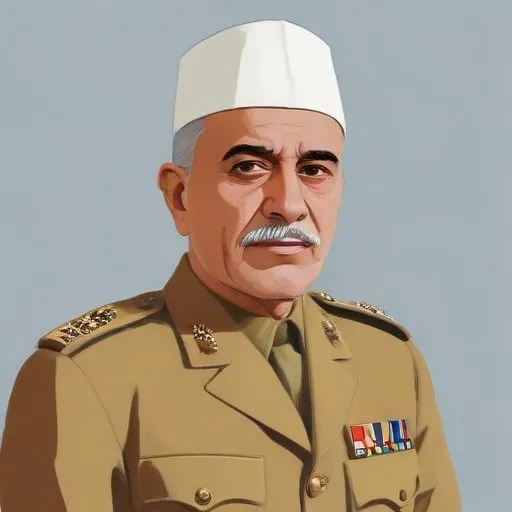
Rahimuddin Khan: The Visionary Leader of the Pakistan Army
A Legacy of Distinction
Rahimuddin Khan is renowned for his distinguished service as the 4th Chairman Joint Chiefs of Staff Committee from 1984 to 1987 and as the longest-serving governor of Balochistan from 1978 to 1984. Throughout his career, he demonstrated exceptional leadership, unwavering commitment, and a vision for development, earning him a revered position in the history of the Pakistan Army.
Early Life and Family
Born on July 21, 1926, in Kaimganj, United Provinces, British India, Rahimuddin Khan hailed from an ethnic Pashtun Afridi family with ancestral roots in Kohat and Tirah. His family was steeped in education and politics, with his uncle,
Zakir Husain, serving as the President of India, and his father-in-law, Mahmud Husain, being a prominent figure in the Pakistan Movement and a member of the first Constituent Assembly.
Military Career
Enrolling as the first cadet of the Pakistan Military Academy in 1947, Rahimuddin Khan embarked on a remarkable journey that would take him to the highest echelons of the military hierarchy. As a captain, he played a significant role in the 1953 Lahore riots, and later commanded 111 Brigade in Rawalpindi and II Corps in Multan. His distinguished service earned him a place at the Command and General Staff College at Fort Leavenworth, Kansas, and the Command and Staff College in Quetta.
Governorship of Balochistan
Rahimuddin Khan's tenure as the governor of Balochistan from 1978 to 1984 was marked by unprecedented development and stability in the province. He declared a general amnesty, ending all military operations, and oversaw the opening of Sui gas fields to Quetta, the construction of nuclear test sites in Chaghai, and the halting of the Baloch insurgency. His commitment to financial honesty and integrity earned him widespread respect and admiration.
Chairman Joint Chiefs of Staff Committee
As the 4th Chairman Joint Chiefs of Staff Committee from 1984 to 1987, Rahimuddin Khan played a crucial role in shaping the country's military strategy. He rejected the future military plan for the Kargil Conflict, demonstrating his unwavering commitment to the nation's interests. His leadership was marked by wisdom, foresight, and a deep understanding of the complexities of the region.
Personal Milestones and Legacy
Throughout his illustrious career, Rahimuddin Khan remained true to his principles, refusing an extension of service as chairman joint chiefs in 1987. He passed away on August 22, 2022, leaving behind a legacy of distinction, service, and sacrifice. His life serves as an inspiration to generations of military leaders, politicians, and citizens, reminding them of the importance of integrity, vision, and dedication to the nation.
Quotes and Memorable Sayings
- "A nation's strength lies not in its military might, but in its people's resolve and unity."
- "Leadership is not about wielding power, but about serving the nation with humility and integrity."
Historical Context and Legacy
Rahimuddin Khan's life and legacy are a testament to the power of vision, leadership, and commitment. His contributions to the development of Balochistan, his role in shaping the Pakistan Army's strategy, and his unwavering commitment to the nation's interests have left an indelible mark on the country's history. As a nation, Pakistan remains indebted to his service, wisdom, and sacrifices.
FAQ
What were Rahimuddin Khans military achievements?
Rahimuddin Khan was a distinguished military officer, serving as the Commander of the Pakistani Armys I Corps and later as the Governor of Balochistan Province.
What was Rahimuddin Khans role in Pakistani politics?
Rahimuddin Khan played a significant role in Pakistani politics, serving as the 7th Governor of Balochistan Province from 1978 to 1984, and later as the Chairman of the Joint Chiefs of Staff Committee.
What was Rahimuddin Khans stance on Baloch nationalism?
Rahimuddin Khan was known for his efforts to address the concerns of Baloch nationalists, promoting economic development and political stability in the region during his tenure as Governor.
Did Rahimuddin Khan face controversy during his career?
Yes, Rahimuddin Khan faced criticism for his role in suppressing Baloch nationalist movements and his alleged involvement in human rights abuses during his tenure as Governor.
What is Rahimuddin Khans legacy in Pakistani history?
Rahimuddin Khan is remembered as a complex figure, with both praise for his military and administrative achievements, and criticism for his role in suppressing regional nationalist movements.