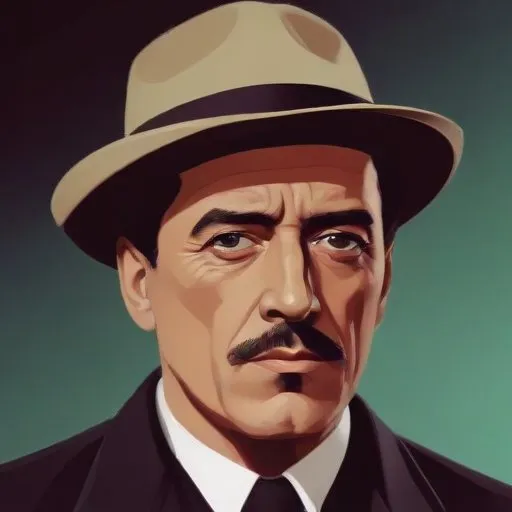
Raoul Walsh: The Pioneering Film Director and Actor
The Birth of a Legend
Raoul Walsh is best known for his influential work as a film director, actor, and founding member of the Academy of Motion Picture Arts and Sciences (AMPAS). With a career spanning over five decades, Walsh left an indelible mark on the film industry, directing iconic films such as
The Big Trail,
The Roaring Twenties,
High Sierra, and
White Heat.
Early Life and Education
Born Albert Edward Walsh on March 11, 1887, in New York, to Elizabeth T. Bruff and Thomas W. Walsh, Raoul grew up in a family with strong ties to the entertainment industry. His mother was the daughter of Irish Catholic immigrants, and his father was an Englishman. Walsh's younger brother, George, would later become a silent screen actor. During his high school days, Raoul was part of Omega Gamma Delta and was friends with the Barrymore family, often spending time reading in their family library.
Film Career and Milestones
Walsh began his acting career in 1909, first on stage in New York City and later in film. In 1913, he changed his name to Raoul Walsh. The following year, he became an assistant to D.W. Griffith and made his first full-length feature film as an actor,
The Life of General Villa, shot on location in Mexico with
Pancho Villa playing the lead. Walsh played Villa as a younger man.
Breakthrough Roles and Collaborations
Walsh's breakthrough role came in 1915 when he played
John Wilkes Booth in Griffith's epic
The Birth of a Nation. He also served as an assistant director on the film. This collaboration marked the beginning of Walsh's journey as a talented filmmaker. Throughout his career, he worked with iconic actors such as
John Wayne,
James Cagney,
Humphrey Bogart, and Ida Lupino.
Awards and Honors
Walsh was nominated for an Academy Award for Best Director for his work on
High Sierra in 1941. He received a star on the Hollywood Walk of Fame in 1960.
Legacy and Influence
Raoul Walsh's work has been noted as an influence on directors such as
Rainer Werner Fassbinder,
Jack Hill, and
Martin Scorsese. His contributions to the film industry have been recognized by the AMPAS, and his legacy continues to inspire generations of filmmakers.
Personal Life and Later Years
Walsh lived in Palm Springs, California, and was buried at Assumption Cemetery in Simi Valley, Ventura County, California, after passing away on December 31, 1980. He directed his last film in 1964.
Trivia and Fun Facts
- Raoul Walsh was a member of the Omega Gamma Delta fraternity in high school.
- He was friends with the Barrymore family and spent time reading in their family library.
- Walsh's brother, George, was a silent screen actor.
Quotes and Memorable Sayings
"I've made over 100 films, but I've never made a single great one." - Raoul Walsh
Visual Timeline and Milestones
| 1887 |
Born Albert Edward Walsh in New York |
| 1909 |
Began acting career on stage and in film |
| 1913 |
Changed name to Raoul Walsh |
| 1914 |
Became assistant to D.W. Griffith |
| 1915 |
Played John Wilkes Booth in The Birth of a Nation |
| 1930 |
Directed The Big Trail, starring John Wayne |
| 1941 |
Nominated for Academy Award for Best Director for High Sierra |
| 1960 |
Received star on the Hollywood Walk of Fame |
| 1980 |
Passed away on December 31 |
Comparative Analysis with Contemporaries
Raoul Walsh's work is often compared to that of his contemporaries, such as
John Ford and
Howard Hawks. While they shared similar styles and themes, Walsh's distinctive approach to storytelling and direction set him apart from his peers.
FAQ
What was Raoul Walshs early career like?
Raoul Walsh started his career as an actor in the early 1900s, appearing in films and stage productions. He later transitioned to directing, working with D.W. Griffith and eventually becoming an assistant director.
What is Raoul Walsh known for in film history?
Raoul Walsh is known for his innovative directing style, which emphasized action, pacing, and visual storytelling. He directed over 130 films, including The Big Trail (1930), White Heat (1949), and The Thief of Bagdad (1926).
What kind of films did Raoul Walsh typically direct?
Raoul Walsh typically directed action-adventure films, westerns, and crime dramas. He was known for his ability to craft thrilling sequences and create memorable characters.
How did Raoul Walshs directing style influence other filmmakers?
Raoul Walshs directing style influenced many filmmakers, including John Ford, who often cited Walsh as an inspiration. Walshs emphasis on visual storytelling and pacing also influenced the development of film noir.
What awards did Raoul Walsh receive for his contributions to film?
Raoul Walsh received an Honorary Academy Award in 1966 for his contributions to the film industry. He was also awarded a star on the Hollywood Walk of Fame in 1960.