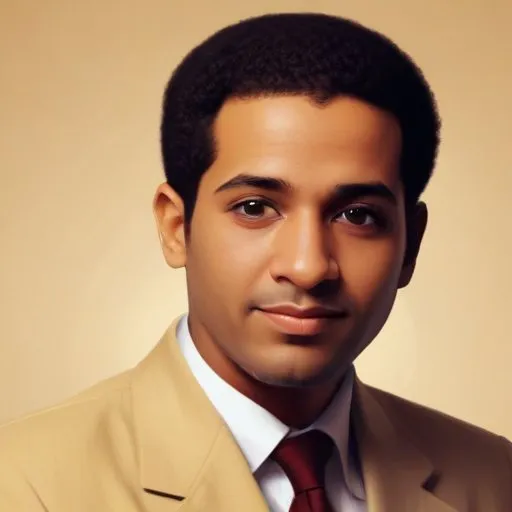
Rashad Khalifa: The Unwavering Quranist and Codebreaker
A Mission to Purify Islam and Uncover the Quran Code
Rashad Khalifa, an Egyptian-American biochemist, is renowned for his radical approach to Islam, which he believed had been corrupted by hadith and sunnah. He is also famous for his discoveroy of the Quran code, a mathematical pattern based on the number 19, which he claimed was a divine signature embedded in the holy book.
Early Life and Education
Khalifa was born on November 19, 1935, in Egypt. He obtained an honors degree from Ain Shams University before immigrating to the United States in 1959. He later earned a Master's degree in biochemistry from the University of Arizona and a Ph.D. from the University of California, Riverside. Khalifa became a naturalized U.S. citizen and settled in Tucson, Arizona, where he married an American woman and had a son and a daughter.
Professional Life and Career Highlights
Khalifa worked as a science adviser for the Libyan government for a year, followed by a stint as a chemist for the United Nations Industrial Development Organization. In 1980, he joined Arizona's State Office of Chemistry as a senior chemist. However, his true calling was in promoting his Quranist ideology, which led him to establish the United Submitters International (USI), an organization dedicated to the study and practice of Quranism.
Philosophical Contributions and Beliefs
Khalifa's work was centered around the idea that the Quran was the only authentic source of Islamic knowledge, and that hadith and sunnah were human interpolations. He believed that previous revelations, including the Bible, had been corrupted by human interference (tahrif). Khalifa's Quranist approach was met with opposition from mainstream Muslims, who saw his views as heretical.
The Quran Code and its Significance
Khalifa's most significant contribution was the discovery of the Quran code, a mathematical pattern based on the number 19. He claimed that this code was a divine signature, proving the Quran's authenticity and uniqueness. The code has been the subject of much debate and controversy, with some hailing it as a groundbreaking discovery and others dismissing it as a mere statistical anomaly.
Personal Milestones and Key Life Events
- 1959: Immigrated to the United States
- 1980: Became a senior chemist in Arizona's State Office of Chemistry
- Founded the United Submitters International (USI)
- Published his Quranist translation of the Quran
Controversies and Public Perception
Khalifa's unconventional views and claims of being a divine messenger who communicated with Gabriel drew criticism and opposition from many Muslims. His changing views on the essence of faith, recorded in his two renditions of the Quran, further fueled the controversy.
Tragic Demise and Legacy
On January 31, 1990, Khalifa was found stabbed to death inside the Mosque of Tucson, Arizona, which he had founded. His tragic demise did not diminish his legacy, and his work continues to inspire Quranists and codebreakers around the world. Khalifa's unwavering commitment to his beliefs, despite facing opposition and criticism, has earned him a place in the annals of Islamic history.
Inspirational Quotes
- "The Quran is the only authority in Islam, and it is the only book on earth that is totally free from errors and contradictions."
- "The code is a mathematical proof of the divine origin of the Quran, and it is a gift from God to humanity."
Historical Context and Comparative Analysis
Khalifa's work must be viewed within the context of Islamic reform movements and critiques of traditional Islam. His Quranist approach was not unique, but his claims of being a divine messenger and the discovery of the Quran code set him apart from other reformers. A comparative analysis with contemporaries such as Muhammad Abduh and Rashid Rida would provide valuable insights into the evolution of Islamic thought in the 20th century.
FAQ
What is Rashad Khalifa known for in Islamic studies?
Rashad Khalifa is known for his work on Quranic studies and his development of the Submitters perspective of Islam. He is also recognized for his discovery of the Quranic code.
What is Rashad Khalifas Quranic code?
Rashad Khalifas Quranic code is a mathematical code that is based on the numbers 19 and 7. He believed that this code was a proof of the Qurans divine origin and that it held the key to understanding the Qurans deeper meanings.
What awards has Rashad Khalifa received for his work in Islamic studies?
Rashad Khalifa has received several awards for his work in Islamic studies, including the King Faisal International Prize for Islamic Studies.
How has Rashad Khalifas work impacted Islamic scholarship?
Rashad Khalifas work has impacted Islamic scholarship by providing a new perspective on the Quran and its interpretation. His discovery of the Quranic code has also sparked significant debate and discussion in the field of Islamic studies.
What is Rashad Khalifas legacy in Islamic studies?
Rashad Khalifas legacy in Islamic studies is as a pioneering scholar who has made significant contributions to our understanding of the Quran. He is remembered for his innovative approach to Islamic scholarship and his commitment to promoting a more progressive and inclusive understanding of Islam.