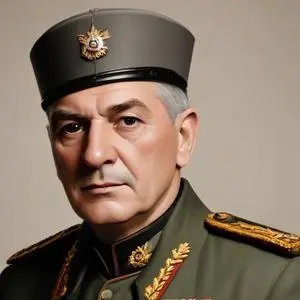
Ratko Mladić: The Controversial Military Leader Behind the Yugoslav Wars
A Life Marked by War Crimes and Controversy
Ratko Mladić, a former military officer, is notorious for leading the Army of Republika Srpska (VRS) during the Yugoslav Wars, particularly the Bosnian War of 1992-1995. He is widely recognized as one of the most infamous war criminals of the 20th century, convicted of committing genocide, war crimes, and crimes against humanity.
Early Life and Military Career
Born on March 12, 1942, in Božanovići, Kingdom of Yugoslavia (now Bosnia and Herzegovina), Mladić joined the Yugoslav People's Army (JNA) in 1965. He rapidly rose through the ranks, becoming a high-ranking officer in the JNA. As Yugoslavia began to disintegrate, Mladić became a prominent figure in the Bosnian Serb military, eventually becoming the Chief of the General Staff of the Army of Republika Srpska.
The Yugoslav Wars and War Crimes
Mladić's leadership during the Yugoslav Wars was marked by allegations of atrocities, including the Srebrenica massacre, which resulted in the deaths of over 8,000 Muslim Bosniaks. He was also accused of orchestrating a campaign of ethnic cleansing, torture, and rape against non-Serb populations. The International Criminal Tribunal for the former Yugoslavia (ICTY) indicted Mladić in 1995, charging him with genocide, war crimes, and crimes against humanity.
The Hunt for Justice
Following the Bosnian War, Mladić evaded capture for nearly 16 years, hiding in Serbia and Bosnia with the aid of sympathizers. In 2005, the Serbian and US governments offered a $5 million reward for information leading to his arrest. Finally, on May 26, 2011, Mladić was apprehended in Lazarevo, Serbia, and subsequently extradited to The Hague to face trial.
Trial and Conviction
Mladić's trial began on May 16, 2012, and lasted for five years. On November 22, 2017, the ICTY found him guilty of 10 counts, including genocide, crimes against humanity, and violations of the laws or customs of war. He was sentenced to life imprisonment, marking a significant milestone in the pursuit of justice for the victims of the Yugoslav Wars.
Legacy and Impact
Mladić's conviction serves as a powerful reminder of the importance of holding individuals accountable for their actions in times of conflict. His legacy is one of devastation and destruction, but it also highlights the need for international cooperation and accountability in the face of war crimes. As the world continues to grapple with the consequences of conflict and genocide, Mladić's story serves as a stark reminder of the importance of upholding human rights and the rule of law.
- Key Dates:
- March 12, 1942: Born in Božanovići, Kingdom of Yugoslavia
- 1965: Joined the Yugoslav People's Army (JNA)
- 1992-1995: Led the Army of Republika Srpska during the Bosnian War
- 1995: Indicted by the ICTY for war crimes, crimes against humanity, and genocide
- May 26, 2011: Arrested in Lazarevo, Serbia
- May 31, 2011: Extradited to The Hague
- November 22, 2017: Convicted and sentenced to life imprisonment
Today, Mladić's name is synonymous with the darkest aspects of human nature, serving as a reminder of the devastating consequences of unchecked aggression and the importance of holding individuals accountable for their actions.
FAQ
What is Ratko Mladić accused of?
Ratko Mladić is accused of war crimes, crimes against humanity, and genocide during the Bosnian War, particularly during the Siege of Sarajevo.
What was Ratko Mladićs role in the Bosnian War?
Ratko Mladić was the Chief of Staff of the Army of Republika Srpska during the Bosnian War, and was responsible for leading the military forces.
When was Ratko Mladić arrested?
Ratko Mladić was arrested in 2011, after evading capture for 16 years, and was subsequently tried at the International Criminal Tribunal for the former Yugoslavia (ICTY).
What was the outcome of Ratko Mladićs trial?
Ratko Mladić was convicted of war crimes, crimes against humanity, and genocide in 2017, and was sentenced to life imprisonment.
What is the significance of Ratko Mladićs case?
Ratko Mladićs case is significant because it represents one of the most high-profile war crimes trials in recent history, and serves as a reminder of the importance of holding individuals accountable for international crimes.