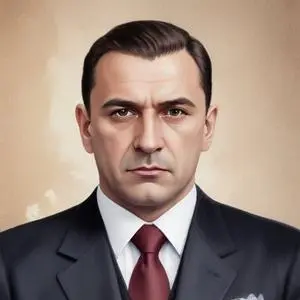
Radovan Karadi: The Controversial Politician and Convicted War Criminal
Introduction to Infamy
Radovan Karadi is notoriously known as the Former President of Republika Srpska, convicted of genocide, crimes against humanity, and war crimes by the International Criminal Tribunal for the former Yugoslavia (ICTY). The once-fugitive politician was eventually brought to justice for his heinous crimes during the Bosnian War, earning him the sobriquet "Butcher of Bosnia."
Early Life and Education
Born on June 19, 1945, in Petnjica, Montenegro, Karadi hailed from a Serb family. He pursued his education and became a trained psychiatrist, a profession that would later be overshadowed by his political ambitions.
Rise to Power and Downfall
Karadi co-founded the Serb Democratic Party in Bosnia and Herzegovina and served as the first president of Republika Srpska from 1992 to 1996. During this period, he was indicted for war crimes by the ICTY, leading him to become a fugitive from 1996 to 2008. Under an alias, he worked at a private clinic in Belgrade, specializing in alternative medicine and psychology. However, his escape from justice was short-lived, as he was arrested in Belgrade in 2008 and extradited to the Netherlands to face trial.
Trial and Conviction
Karadi was placed in the custody of the ICTY and charged with 11 counts of war crimes and crimes against humanity. In 2016, he was found guilty of genocide in Srebrenica, war crimes, and crimes against humanity, and sentenced to 40 years imprisonment. However, in 2019, an appeal he had filed against his conviction was rejected, and the sentence was increased to life imprisonment.
Personal Milestones and Key Life Events
- Born on June 19, 1945, in Petnjica, Montenegro
- Trained as a psychiatrist
- Cofounded the Serb Democratic Party in Bosnia and Herzegovina
- Served as the first president of Republika Srpska from 1992 to 1996
- Fugitive from 1996 to 2008
- Arrested in Belgrade in 2008
- Convicted of war crimes and crimes against humanity in 2016
- Sentence increased to life imprisonment in 2019
Influence on Modern Society and Legacy
Karadi's crimes have left a lasting impact on the world, serving as a stark reminder of the atrocities that can be committed during times of conflict. His conviction and sentencing have been hailed as a victory for international justice, yet the scars of his actions will continue to haunt the people of Bosnia and Herzegovina for generations to come.
Conclusion
Radovan Karadi's life is a testament to the destructive power of nationalism and the devastating consequences of unchecked ambition. As the world grapples with the complexities of modern conflict, Karadi's story serves as a cautionary tale, reminding us of the importance of accountability and the pursuit of justice.
FAQ
What was Radovan Karadžićs role in the Bosnian War?
Radovan Karadžić was the President of Republika Srpska, a self-proclaimed Bosnian Serb entity, during the Bosnian War (1992-1995), and was later convicted of war crimes and genocide by the International Criminal Tribunal for the former Yugoslavia (ICTY).
What war crimes was Radovan Karadžić convicted of?
Karadžić was found guilty of genocide, war crimes, and crimes against humanity, including the Srebrenica massacre, for his role in orchestrating ethnic cleansing and violence against Bosniaks and Croats during the conflict.
How long was Radovan Karadžić on the run?
Karadžić evaded capture for over 12 years, from 1995 to 2008, before being arrested and eventually convicted by the ICTY.
What was Radovan Karadžićs sentence?
Karadžić was sentenced to life imprisonment for his crimes, a verdict upheld by appeals courts.
What is Radovan Karadžićs legacy?
Karadžićs actions and ideology contributed to the devastating toll of the Bosnian War, resulting in the loss of countless lives, mass displacement, and lasting trauma for the people of Bosnia and Herzegovina.