


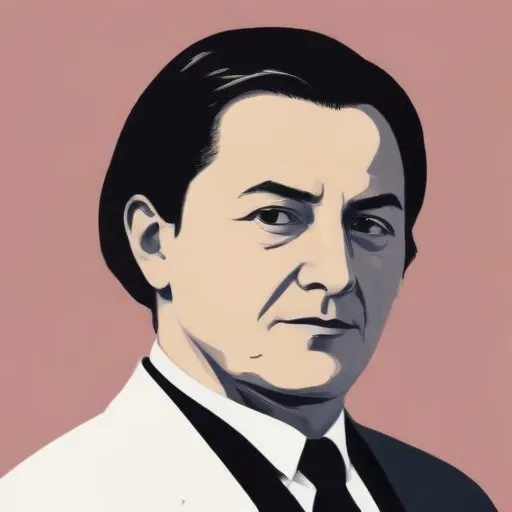
First President of Bosnia and Herzegovina, leading the country through its independence and wartime struggles, and a key figure in the Bosnian War. He's known for his leadership and efforts to unite the Bosnian people.
Alija Izetbegovi was a Bosnian politician, Islamic philosopher, and author who made history by becoming the first president of the newly independent Republic of Bosnia and Herzegovina in 1992. He is known for leading the country through the tumultuous period of the Bosnian War, navigating complex relationships with neighboring nations, and shaping the country's future.
Izetbegovi was born on August 8, 1925, in the town of Bosanski amac, Bosnia and Herzegovina. His paternal grandfather, Alija, married a Turkish woman named Sdka Hanm, and the couple eventually settled in Bosanski amac, where they had five children. Izetbegovi's early life was marked by a deep connection to Islam, which would later influence his philosophical and political views.
Izetbegovi's entry into politics began in the 1940s, when he joined the Young Muslims, a group promoting Islamic values and social justice. He was arrested in 1946 for his involvement with the organization and spent several years in prison. After his release, he pursued a law degree and became a successful lawyer, eventually entering politics in the 1960s.
Izetbegovi was a prolific writer and thinker, penning several influential books on Islam and politics. His most notable works include
In 1992, Izetbegovi was elected as the first president of the newly independent Bosnia and Herzegovina. Shortly after, the country descended into chaos as the Serb community revolted, creating the Republika Srpska and sparking the Bosnian War. Izetbegovi led the Bosniak forces, initially alongside Croatian forces, until a separate war erupted between them. He played a crucial role in negotiating the Washington Agreement, which eventually led to the Dayton Agreement, ending the war in 1995.
Izetbegovi's legacy is marked by both praise and controversy. Critics accuse him of being too soft on Islamist extremism and failing to prevent ethnic cleansing during the war. Defenders argue that he navigated a treacherous geopolitical landscape, preserving Bosnia and Herzegovina's independence in the face of overwhelming odds. Despite these controversies, Izetbegovi remains a revered figure in Bosnian politics, remembered for his unwavering commitment to his country and its people.
"Islam is not a system, it's a faith. It's not a dogma, it's a spiritual direction."
"Bosnia is not just a country, it's a symbol of coexistence."
"The only way to defeat extremism is to promote education, tolerance, and understanding."
85 Years Old
The first President of Serbia, a mastermind behind the Yugoslav Wars, and a key figure in the Kosovo conflict, known for his nationalist and authoritarian rule.
Born in 1922
First President of Croatia, leading the country to independence from Yugoslavia, and known for his role in shaping modern Croatian identity.
95 Years Old
First President of Russia, leading the country's transition from communism to democracy, and known for his bold reforms and iconic leadership style.
80 Years Old
The 42nd President of the United States, a charismatic leader who reformed healthcare and economy, and infamous for his scandals.
89 Years Old
The first female US Secretary of State, serving from 1997 to 2001, who played a key role in shaping American foreign policy during the Clinton administration. She's known for her strong diplomatic efforts and advocacy for democracy and human rights.
85 Years Old
A seasoned diplomat and strategist who brokered the Dayton Peace Accords, ending the Bosnian War, and served as a key advisor to several US presidents.
Born in 1925
American diplomat who served as Secretary of State under President Bill Clinton, playing a key role in international relations and foreign policy during the 1990s. He's known for his efforts to broker peace in the Balkans and Middle East.
Born in 1922
The first Arab to lead the United Nations, he played a key role in shaping international relations and global governance during a tumultuous period in the 1990s. He's also known for his efforts to reform the UN and promote peacekeeping operations.
