


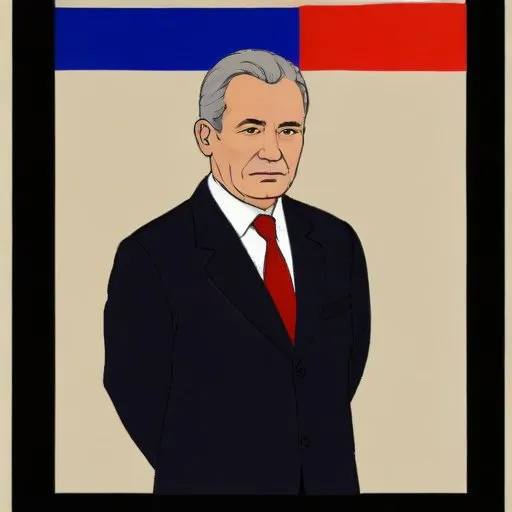
Croatia's second president, a key figure in the country's independence and transition to democracy, known for his role in shaping modern Croatia's political landscape.
Stjepan Mesi is a name synonymous with Croatian politics, having served as the President of Croatia from 2000 to 2010, and holding various other prominent positions throughout his career. He is revered for his instrumental role in shaping the country's transition from socialism to democracy, earning him a place in the annals of Croatian history.
Born on December 24, 1934, in Orahovica, Croatia, Mesi's journey in politics began in the 1960s when he served as a deputy in the Croatian Parliament. After a brief hiatus, he rejoined politics in 1990, becoming a member of the Croatian Democratic Union (HDZ) party.
Mesi's dedication and leadership qualities propelled him to the position of President of the Executive Council, also known as the Prime Minister of the Socialist Republic of Croatia, in 1990. His cabinet is recognized by the Government of Croatia as the first government cabinet of the current Croatian republic. He later served as the Vice President and subsequently the last President of Yugoslavia before its dissolution in 1991.
In the aftermath of Yugoslavia's dissolution, Mesi continued to play a vital role in Croatian politics. He served as the Speaker of the Croatian Parliament from 1992 to 1994 and later founded the Croatian Independent Democrats (HND) party. In 1997, he merged HND with the Croatian Peoples Party (HNS).
In 2000, Mesi was elected as the President of Croatia, a position he held for two five-year terms until 2010. During his presidency, he oversaw significant reforms, strengthening Croatia's economy and paving the way for the country's integration into the European Union.
Mesi's unwavering commitment to his country and its people has left an indelible mark on Croatian politics. His leadership during a period of significant transition and turmoil has earned him the respect and admiration of his fellow citizens. Today, he remains an influential figure in Croatian politics, his wisdom and experience sought by many.
Mesi's steadfast dedication to democracy and national unity has guided his political ideology. He has consistently advocated for the importance of cooperation and dialogue in resolving conflicts and promoting regional stability.
Mesi's leadership has had a profound impact on modern Croatian society. His commitment to democratic values and human rights has inspired generations of Croatians, shaping the country's transition from a socialist state to a modern, democratic nation.
Mesi's distinguished career spans multiple decades, with notable achievements including:
Stjepan Mesi's remarkable life and career serve as a testament to his unwavering dedication to his country and its people. His legacy continues to inspire and guide future generations of Croatian leaders.
Born in 1922
First President of Croatia, leading the country to independence from Yugoslavia, and known for his role in shaping modern Croatian identity.
73 Years Old
A Croatian historian and politician who served as the 8th Prime Minister of Croatia, known for his role in the country's accession to the European Union and his later corruption scandal.
82 Years Old
The 7th Prime Minister of Croatia, a key figure in the country's transition to democracy and EU integration, known for his efforts to rebuild and stabilize the nation after a devastating war.
73 Years Old
A Croatian Deputy Prime Minister and sociologist who advocated for social justice, women's rights, and democratic values. She played a key role in shaping Croatia's post-war development and EU integration.
73 Years Old
Croatia's first female Prime Minister, serving from 2009 to 2011, known for her efforts to reform the country's economy and politics. She was also a prominent journalist and politician before taking office.
