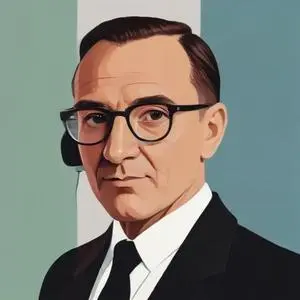
Reginald Fessenden: The Father of Radio Broadcasting
Tuning into a Legacy
Reginald Fessenden is celebrated as the inventor who pioneered radio technology, laying the foundation for amplitude modulation (AM) radio. He achieved the remarkable feat of transmitting speech by radio in 1900 and successfully demonstrated the first two-way radiotelegraphic communication across the Atlantic Ocean in 1906.
Early Life and Education
Born on October 6, 1866, in East Bolton, Canada East, Fessenden was the eldest of four children to Reverend Elisha Joseph Fessenden and Clementina Trenholmes. His family moved frequently throughout Ontario, where he attended various educational institutions. Notably, he enrolled in the DeVeaux Military school at the age of nine and later attended Trinity College School in Port Hope, Ontario.
A Path to Innovation
After completing his education, Fessenden worked for the Imperial Bank at Woodstock before returning to his hometown in the Eastern Townships. He then attended Bishop's College School, where he earned a mathematics mastership teaching job and a scholarship to study in the college division at Bishop's University. During this time, the teenage Fessenden taught mathematics to younger students, including some older than himself, while simultaneously pursuing his own studies.
Breakthroughs and Achievements
Fessenden's groundbreaking work in radio technology led to several notable achievements:
- First transmission of speech by radio (1900)
- First two-way radiotelegraphic communication across the Atlantic Ocean (1906)
- Reported to have made the first radio broadcast of entertainment and music (1906), although some details remain unverified
Career Highlights and Major Works
Fessenden's prolific career spanned various fields, earning him hundreds of patents. Some of his notable contributions include:
- Developing the heterodyne principle, a method for detecting and receiving radio signals
- Creating the Fessenden oscillator, a device used to generate continuous-wave radio signals
- Improving sonar technology, which played a significant role in naval warfare during World War I
Influence on Modern Society
Fessenden's pioneering work in radio technology paved the way for the development of modern communication systems. His contributions have had a lasting impact on various aspects of society, including:
- Commercial radio broadcasting
- Telecommunications industry
- Navigation and sonar technology
Awards and Honors
Fessenden's achievements were recognized through various awards and honors, including:
- Elliott Cresson Medal (1921)
- Inducted into the National Inventors Hall of Fame (1977)
Personal Milestones and Key Life Events
Fessenden's life was marked by significant events that shaped his journey:
- Claimed U.S. citizenship through his American-born father
- Died on July 22, 1932, leaving behind a legacy in radio technology
Historical Context and Legacy
Fessenden's contributions to radio technology have endured for over a century, earning him a place alongside other pioneers in the field. His work laid the foundation for modern communication systems, forever changing the way people connect and access information.
FAQ
What was Reginald Fessendens contribution to the development of radio?
Reginald Fessenden was a pioneer in the development of radio, credited with inventing radiotelephony, or voice transmission over radio waves.
How did Reginald Fessendens invention of radiotelephony work?
Reginald Fessendens invention of radiotelephony worked by using a modulated carrier wave to transmit audio signals over radio waves, allowing for the transmission of voice and music.
What was Reginald Fessendens role in the development of AM radio?
Reginald Fessendens invention of radiotelephony paved the way for the development of AM radio, which became a popular medium for broadcasting music, news, and entertainment.
What were Reginald Fessendens achievements in academia?
Reginald Fessenden was a professor of electrical engineering at Purdue University and later at the University of Pittsburgh, where he taught and conducted research in electrical engineering and physics.
How is Reginald Fessenden remembered in the history of radio?
Reginald Fessenden is remembered as a pioneer in the development of radio, credited with inventing radiotelephony and paving the way for the development of modern radio broadcasting.