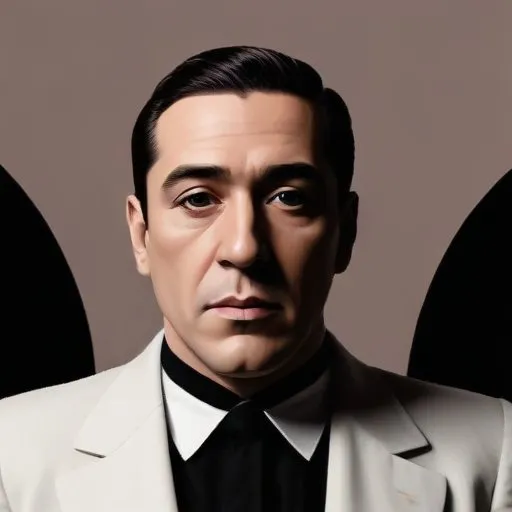
Ricardo Cortez: The Chameleon of Hollywood's Golden Age
A Hollywood Icon Born of Humble Beginnings
Ricardo Cortez, born Jacob Kranze or Jacob Krantz, was an American actor and film director who left an indelible mark on Hollywood's Golden Age. With a career spanning over three decades, Cortez was known for his versatility, playing both romantic leads and character actors with equal aplomb, earning him a reputation as one of the most prolific actors of his time.
Early Life and Career
Born on September 19, 1900, in New York City, Cortez grew up in a Jewish family with his parents, Sarah and Morris Kranze or Krantz, and his brother,
Stanley Cortez (née Stanislaus Kranze or Krantz). Prior to entering the film industry, Cortez worked as an amateur boxer and a runner on Wall Street. His early life experiences would later influence his performances on screen, bringing a unique authenticity to his characters.
The Rise to Fame
Hollywood executives, seeking to capitalize on Cortez's handsome features and the popularity of Latin lovers in silent films, changed his name from Krantz to Cortez. This strategic move propelled Cortez to stardom, with his early films showcasing his romantic leads in films like
Montana Moon (1930) alongside Joan Crawford. As the industry transitioned to sound cinema, Cortez's strong delivery and New York accent made him an ideal character actor, and he went on to appear in over 100 films.
Notable Roles and Collaborations
Cortez's impressive filmography boasts a range of notable roles, including his portrayal of Sam Spade in the original pre-Code version of
The Maltese Falcon (1931), a role that would later be associated with
Humphrey Bogart. He also starred alongside
Charles Farrell and
Bette Davis in
The Big Shakedown (1934) and with
Al Jolson and Dolores del Rio in
Wonder Bar (1934). In 1936, Cortez replaced
Warren William as Perry Mason in
The Case of the Black Cat.
Directorial Ventures
In addition to his acting career, Cortez ventured into directing, helming seven films for 20th Century Fox between 1938 and 1940. These program pictures, made on a shoestring budget, demonstrated Cortez's adaptability and commitment to his craft.
Legacy and Impact
Ricardo Cortez's contributions to Hollywood's Golden Age are undeniable. His ability to navigate both leading roles and character acting, coupled with his direction of numerous films, cemented his status as a talented and resilient figure in the industry. Cortez's legacy extends beyond his own body of work, influencing generations of actors and filmmakers.
Personal Life and Milestones
Cortez's life was marked by significant personal milestones, including his marriage to actress
Alma Rubens and his later years, during which he focused on writing and directing. Despite the controversy surrounding his perceived Latin heritage, Cortez remained dedicated to his craft, leaving behind a rich filmography that continues to captivate audiences today.
Trivia and Fun Facts
- Cortez was known for his impressive physique, which he maintained through his love of boxing.
- Despite being typecast as a Latin lover, Cortez was of Jewish descent.
- Cortez's brother, Stanley Cortez, was a renowned cinematographer who worked on films such as The Magnificent Ambersons (1942).
Conclusion
Ricardo Cortez's remarkable career, spanning over three decades, serves as a testament to his dedication, versatility, and resilience. As both an actor and director, Cortez left an indelible mark on Hollywood's Golden Age, solidifying his place as one of the most talented and prolific figures of his time.
FAQ
What was Ricardo Cortezs most notable film role?
Ricardo Cortez is best known for his portrayal of Sam Spade in the 1931 film The Maltese Falcon, directed by Roy Del Ruth.
What was Ricardo Cortezs early career like?
Cortez began his career as a stockbroker, but eventually turned to acting, making his film debut in the 1920s.
What was Ricardo Cortezs relationship like with other Hollywood stars?
Cortez was part of a circle of Hollywood stars that included Greta Garbo, Joan Crawford, and Clark Gable, and was known for his charm and charisma on and off screen.
What awards did Ricardo Cortez receive?
Cortez received a star on the Hollywood Walk of Fame in 1960, recognizing his contributions to the film industry.
What is Ricardo Cortezs legacy in Hollywood?
Cortezs film career, which spanned over three decades, has left a lasting impact on the Hollywood film industry, with many actors and directors citing him as an influence.