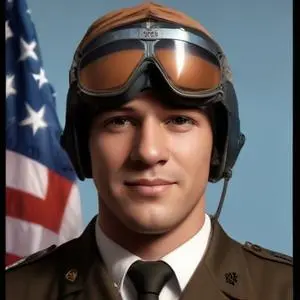
Richard Bong: The Flying Ace of World War II
A Legendary Fighter Pilot and Medal of Honor Recipient
Richard "Dick" Bong is renowned for being the highest-scoring American fighter pilot of World War II, with an impressive record of shooting down 40 Japanese aircraft. This incredible feat was achieved solely with the Lockheed P-38 Lightning fighter, cementing his status as the country's top flying ace during the war.
Early Life and Interest in Aviation
Born on September 24, 1920, in Superior, Wisconsin, Bong was the eldest of nine children to Carl Bong, a Swedish immigrant, and Dora Bryce, an American of Scotch-English descent. Growing up on a farm in Poplar, Wisconsin, Bong developed an early fascination with aircraft while watching planes fly over the farm, carrying mail for President
Calvin Coolidge's summer White House in Superior. This sparked a lifelong passion for aviation, which led him to become an avid model builder and eventually pursue a career in flying.
Education and Military Service
Bong attended Poplar High School, where he was an active member of the marching band and participated in various sports. After transferring to Central High School in Superior for his senior year, he graduated in 1938 and went on to study at Superior State Teachers College (now the University of Wisconsin-Superior). While pursuing his education, Bong enrolled in the Civilian Pilot Training Program and took private flying lessons. On May 29, 1941, he enlisted in the Army Air Corps Aviation Cadet Program, where one of his flight instructors was Captain
Barry Goldwater, who would later become a prominent political figure.
War Heroics and Medal of Honor
Bong's exceptional flying skills and bravery during World War II earned him numerous accolades, including the Medal of Honor, the highest military honor awarded by the United States. He flew multiple combat missions in the Pacific Theater, showcasing his exceptional marksmanship and aerial prowess. Bong's Medal of Honor citation recognizes his extraordinary heroism during a mission on October 12, 1943, where he shot down three Japanese bombers and damaged two others, despite being outnumbered and facing intense enemy fire.
Tragic Death and Legacy
Tragically, Richard Bong's life was cut short on August 6, 1945, when he died in a crash while testing a Lockheed P-80 jet fighter in California, just weeks before the war's end. In 1986, he was posthumously inducted into the National Aviation Hall of Fame, and numerous commemorative monuments and structures have been named in his honor, including an airport, bridges, a theater, and streets leading to the National Museum of the United States Air Force in Dayton, Ohio.
Personal Milestones and Key Life Events
- September 24, 1920: Born in Superior, Wisconsin
- 1938: Graduated from Central High School in Superior
- May 29, 1941: Enlisted in the Army Air Corps Aviation Cadet Program
- October 12, 1943: Awarded the Medal of Honor for heroism during World War II
- August 6, 1945: Died in a plane crash while testing a Lockheed P-80 jet fighter
Inspirational Quotes and Memorable Sayings
- "Fly by the seat of your pants, but always keep your eyes on the horizon." - Richard Bong
Historical Context and Legacy
Richard Bong's remarkable achievements during World War II have left an indelible mark on the history of aviation. He remains an inspiration to generations of pilots and military personnel, and his legacy serves as a testament to the bravery and sacrifice of those who have served in the armed forces.
FAQ
What was Richard Bongs military career like?
Richard Bong was a highly decorated American soldier and pilot who served in World War II. He was a fighter pilot and flew P-38 Lightning aircraft, earning numerous awards for his bravery and skill.
How did Richard Bong earn the Medal of Honor?
Richard Bong earned the Medal of Honor for his heroic actions on November 18, 1944, when he engaged and destroyed several enemy aircraft, despite being heavily outnumbered.
What was Richard Bongs record in World War II?
Richard Bong was the top-scoring American fighter pilot of World War II, with 40 confirmed aerial victories. He was also a decorated ace and one of the most celebrated pilots of the war.
What happened to Richard Bong after the war?
After the war, Richard Bong remained in the military and was involved in testing the P-80 Shooting Star, a jet fighter aircraft. He died in a plane crash in 1945 while on a training mission.
How is Richard Bong remembered?
Richard Bong is remembered as a hero and a legend in the US military, with numerous honors and tributes paid to him. He was inducted into the National Aviation Hall of Fame and has a museum dedicated to his life and achievements.