


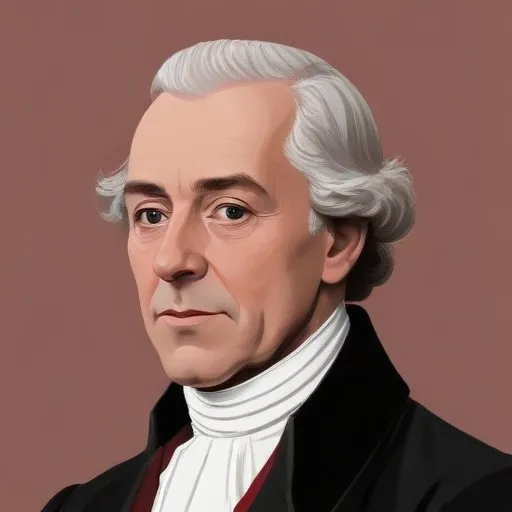
A renowned architect and politician who designed iconic buildings, including Chiswick House, and held influential government positions, shaping 18th-century Ireland's politics and architecture.
Regarded as the "Apollo of the Arts" and the "Architect Earl," Richard Boyle, 3rd Earl of Burlington, was a British architect and noble who revolutionized the world of architecture and landscaping. He is credited with bringing Palladian architecture to Britain and Ireland, leaving an indelible mark on the built environment of his time.
Born on April 25, 1694, in Yorkshire, England, Richard Boyle was the only son of Charles Boyle, 2nd Earl of Burlington, and his wife, Juliana Boyle née Noel. At the tender age of nine, he succeeded to his titles and extensive estates in Yorkshire and Ireland following his father's death in February 1704. During his minority, which lasted until 1715, his English and Irish lands, as well as his political interests and patronages, were managed by his mother.
Burlington's early fascination with music was evident in his patronage of renowned composers such as Georg Frideric Handel, who dedicated two operas, Teseo and Amadigi di Gaula, to him during his stay at Burlington House. Francesco Barsanti also dedicated his six recorder sonatas of Op. 1 to Lord Burlington. His love for music was only rivaled by his enthusiasm for architecture, which would become the hallmark of his life's work.
Burlington embarked on three foreign Grand Tours between 1714 and 1719, which provided him with an opportunity to develop his taste and refine his skills as an architect. A further trip to Paris in 1726 allowed him to draw inspiration from the city's architectural masterpieces. His professional skill, supported by a mason-contractor, was exceptional in an English aristocrat, and he carried his copy of Andrea Palladio's treatise on architecture wherever he went.
Burlington's architectural legacy is embodied in his numerous projects, including:
Through his work, Burlington not only introduced Palladian architecture to Britain and Ireland but also influenced generations of architects, craftsmen, and landscapers. His contribution to the world of architecture and art has earned him a lasting place in history.
In addition to his architectural achievements, Burlington was known for his:
Burlington's remarkable life came to an end on December 4, 1753, but his architectural legacy continues to inspire and awe people to this day.
Burlington's life and work are a testament to the cultural and artistic flowering of 18th-century Britain and Ireland. His commitment to Palladian architecture helped shape the built environment of his time and paved the way for future generations of architects and designers. As the "Apollo of the Arts" and the "Architect Earl," Richard Boyle, 3rd Earl of Burlington, remains an icon of artistic excellence and a beacon of inspiration for architects, historians, and art lovers alike.
Born in 1573
Designed iconic English buildings, including the Queen's House, blending Renaissance and classical styles. He's considered the father of English Palladian architecture.
Born in 1632
A renowned 17th-century polymath who made groundbreaking contributions to physics, mathematics, and architecture, designing iconic landmarks like St Paul's Cathedral. Their innovative works continue to inspire and influence modern architecture and design.
Born in 1664
Designed grand English country houses, like Blenheim Palace, and wrote witty Restoration comedies, blending architecture and drama.
Born in 1683
King of Great Britain and Ireland from 1727 to 1760, known for his military victories, particularly the Battle of Dettingen, and his role in the War of the Austrian Succession.
Born in 1683
British queen and regent who played a significant role in promoting the arts and sciences, and was a strong influence on her husband, King George II. She was a patron of prominent figures like Isaac Newton and Handel.
