


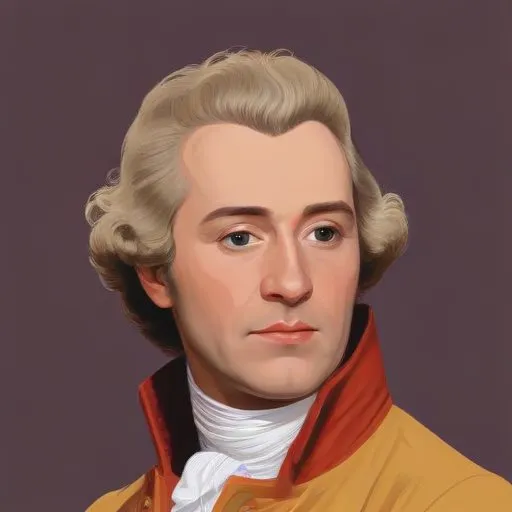
A renowned portrait painter of the 18th century, capturing the likenesses of British aristocracy and royalty with delicate, expressive brushstrokes. His works are treasured for their intimate, revealing quality.
Richard Cosway, a renowned English portrait painter, was celebrated for his exquisite miniatures, captivating the hearts of royalty, aristocrats, and art enthusiasts alike. His talent for capturing the essence of his subjects, often on tiny canvases, earned him a reputation as one of the leading artists of the Georgian and Regency era.
Born on November 5, 1742, in Tiverton, Devon, Cosway was the son of a schoolmaster. He received his initial education at Blundells School, where his father taught, before moving to London at the age of 12 to pursue his passion for painting. In 1754, he won a prize from the Society of Arts, demonstrating his early talent.
Cosway's artistic journey took off in the late 1750s, studying under fellow Devonian Thomas Hudson and William Shipley. By 1760, he had established his own business and exhibited his first works at the age of 20 in 1762. His rapid success led to his election as one of the first associate members of the Royal Academy in 1770, followed by full membership in 1771.
In 1780, Cosway painted the future King George IV, a prestigious commission that solidified his reputation. Five years later, he was appointed Painter to the Prince of Wales, a title never awarded before or since. His subjects included European aristocrats, such as Madame du Barry, mistress of King Louis XV of France, and the Prince's first wife, Maria Anne Fitzherbert.
Cosway's pupils, including Andrew Plimer, carried on his legacy, ensuring the continuation of his artistic style. In 1995-1996, the National Portrait Gallery in London honored Cosway and his wife, Maria, with an exhibition featuring 250 works, celebrating their contributions to Regency art.
Cosway's personal life was marked by friendships with notable figures, including fellow Freemason and Swedenborgian William Blake, Chevalier d'Eon, and Thomas Jefferson, through his wife Maria, who was a close friend of the American statesman. This eclectic circle of acquaintances likely influenced his artistic approach and worldview.
Richard Cosway's remarkable career, spanning over six decades, left an indelible mark on the art world. His mastery of miniature painting, combined with his connections to European royalty and aristocracy, cemented his place as a prominent artist of the Georgian era.
Born in 1727
A prominent 18th-century painter of landscapes and portraits, capturing the essence of British aristocracy and gentry with elegance and refinement.
Born in 1723
A prominent portrait painter and art educator who helped establish the Royal Academy of Arts, known for his influential teachings and masterful depictions of 18th-century British aristocracy.
Born in 1907
The 43rd Governor of Michigan was a prominent businessman and politician who played a significant role in shaping the state's economy and politics. He's most known for his innovative leadership and advocacy for civil rights.
Born in 1726
A pioneering portrait painter who helped establish the Rococo style in England, known for his delicate and expressive works that captured the essence of his subjects.
Born in 1738
A pioneering portrait painter who captured the likenesses of American colonists and British aristocrats with remarkable realism and detail. His works offer a glimpse into 18th-century American and British society.
Born in 1769
A prominent portrait painter and educator who dominated English art in the late 18th and early 19th centuries, capturing the likenesses of European royalty and aristocracy.
Born in 1776
A Romantic-era painter celebrated for capturing the essence of the English countryside through serene, naturalistic landscapes, often featuring skies and clouds.
