


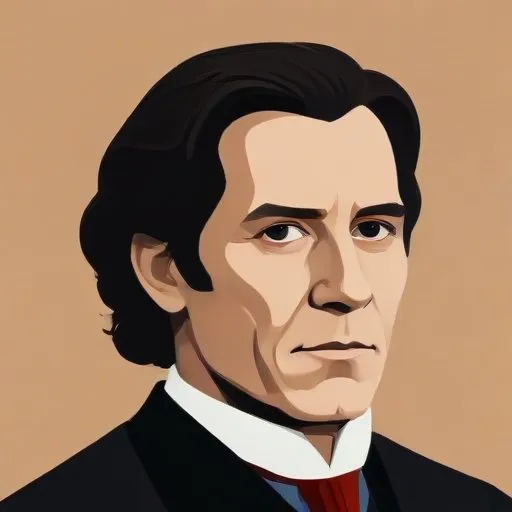
A prominent 19th-century lawyer and politician who wrote the classic novel "Two Years Before the Mast," a seminal work of American literature that vividly captures life at sea.
Richard Henry Dana Jr. is best known for his seminal work,
Born on August 1, 1815, in Cambridge, Massachusetts, into a family of colonial settlers, Dana was exposed to the world of literature and politics from a young age. His father, Richard Henry Dana Sr., was a poet and critic, and his ancestor, Anne Bradstreet, was a celebrated poet. Dana's educational journey was marked by contrasts, from the strict discipline of Samuel Barrett's school to the more relaxed atmosphere of Ralph Waldo Emerson's private school.
In 1834, Dana embarked on a sea voyage aboard the brig Pilgrim, bound for Alta California, then a part of Mexico. This journey, which lasted two years, was a turning point in his life. The harsh realities of life at sea, including the mistreatment of sailors, inspired him to write
Dana's literary success was complemented by his work as an attorney, where he championed the causes of the oppressed. During the Civil War, he successfully represented the U.S. government in the Prize Cases before the U.S. Supreme Court. His advocacy extended to fugitive slaves and freedmen, whom he represented in various legal battles.
Richard Henry Dana Jr.'s legacy is multifaceted. His writing has influenced generations of American writers, including Herman Melville and Mark Twain. His advocacy for the rights of seamen and the oppressed has left an indelible mark on American history. Today, Dana is remembered as a pioneering figure in American literature and a champion of social justice.
Dana's contributions to American literature and social justice have been recognized through various awards and honors, including:
Richard Henry Dana Jr.'s life was a testament to the power of literature and advocacy. Through his writing and legal work, he championed the causes of the oppressed, leaving behind a legacy that continues to inspire generations of Americans.
Born in 1819
Author of epic sea tales and philosophical explorations, including the iconic "Moby-Dick", which continues to influence literature and popular culture.
Born in 1809
A master of dark and atmospheric storytelling, crafting haunting tales of mystery and horror that continue to captivate readers to this day.
Born in 1807
A celebrated poet and educator, known for his lyrical and narrative poems that often explored American history and culture, including the iconic "Paul Revere's Ride".
Born in 1803
A leading figure in the Transcendentalist movement, he advocated for individualism, self-reliance, and nature-inspired spirituality through his essays and poetry. His ideas continue to influence American thought and culture.
Born in 1804
Author of dark, psychologically complex tales that explore the human condition, often set in 17th-century New England, and known for his masterpiece "The Scarlet Letter".
Born in 1841
A renowned Supreme Court Justice, he penned influential opinions that shaped American law, particularly in the areas of free speech and judicial restraint.
Born in 1807
A prominent abolitionist and poet, known for his powerful writings that advocated for social justice and equality, leaving a lasting impact on American literature and history.
Born in 1794
A prominent 19th-century poet and journalist, known for his romantic and nature-inspired poetry, as well as his influential editorship of the New York Evening Post.
