


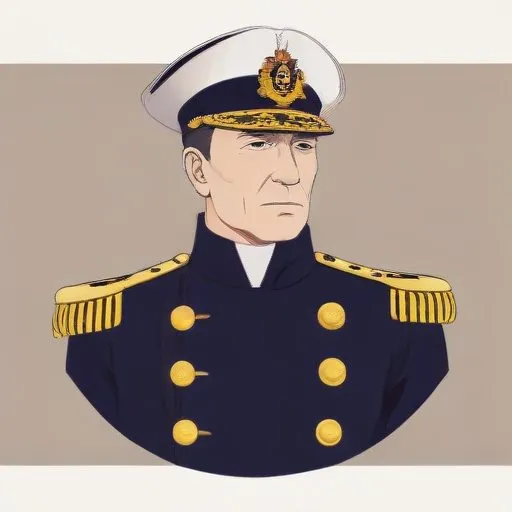
A British naval officer who served during the French Revolutionary and Napoleonic Wars, known for his bravery and tactical skills in several key battles. He was also a pioneer in the development of naval signaling systems.
Vice Admiral Sir Richard Jeffrey Ibbotson is a renowned Royal Navy officer who served as Deputy Commander-in-Chief Fleet, a position that demanded exceptional leadership and strategic prowess. Throughout his distinguished career, Ibbotson has been recognized for his bravery, earning the coveted Distinguished Service Cross for his valorous service during the Gulf War in 1991.
Born on 27 June 1954, Ibbotson pursued higher education at Durham University, laying the foundation for his future success in the naval forces. His academic rigor and innate leadership qualities set him apart, preparing him for the challenges that lay ahead.
Ibbotson's naval journey began in 1975 when he joined the Royal Navy. He specialized in underwater warfare, rapidly rising through the ranks with his exceptional skills and dedication. Promotions followed: Lieutenant in 1977, Lieutenant Commander in 1985, and Commander in 1990.
Ibbotson's leadership skills were evident in his various command roles, including Commanding Officer of the mine countermeasure vessel HMS Hurworth, the frigate HMS Boxer, and the 1st Frigate Squadron. He also served as Captain of the Royal Naval College, Dartmouth, and Commander of British Forces in the Falkland Islands.
In recognition of his outstanding service, Ibbotson was appointed Knight Commander of the Order of the British Empire (KBE) in the 2011 New Year Honours. This prestigious award underscores his commitment to excellence and his contributions to the Royal Navy.
Vice Admiral Sir Richard Jeffrey Ibbotson's illustrious career serves as a testament to his unwavering dedication to the Royal Navy and his country. His impressive command and leadership roles, coupled with his bravery and strategic acumen, have left an indelible mark on the naval forces.
As a celebrated naval officer, Ibbotson's influence extends beyond his military career, inspiring generations of leaders and serving as a shining example of excellence in the face of adversity.
Born in 1735
A renowned naval commander who led British fleets to several victories during the French Revolutionary and Napoleonic Wars, earning him great acclaim and a peerage. He also served as First Lord of the Admiralty, implementing significant naval reforms.
Born in 1750
A British naval officer who played a crucial role in several significant naval battles, including the Battle of Trafalgar, and was a close friend and colleague of Lord Nelson.
Born in 1744
An 18th-century naval commander and Member of Parliament, known for his victories in the American Revolutionary War and his role in shaping British naval strategy.
Born in 1757
A British naval hero who led a successful campaign against the Barbary States, liberating thousands of Christian slaves and earning a viscountcy. He's also known for his reforms to the Royal Navy.
Born in 1726
A renowned British naval officer and politician who played a key role in the American Revolutionary War and later became Treasurer of the Navy, known for his tactical genius and bravery at sea.
Born in 1724
A British naval hero who commanded fleets during the American Revolutionary War and French Revolutionary Wars, known for his bravery and tactical genius.
