


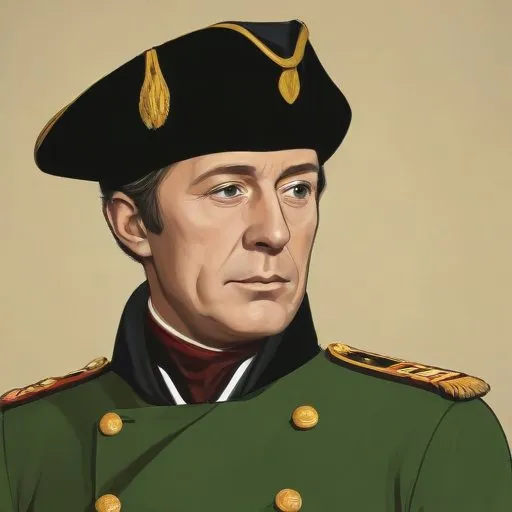
Led a successful invasion of Canada during the American Revolutionary War, capturing Montreal and inspiring rebellion against British rule.
Richard Montgomery, a name etched in the annals of American history, is synonymous with bravery, strategic brilliance, and sacrifice. This Irish-born American military officer led the ill-fated 1775 invasion of northeastern Quebec, a pivotal moment in the American Revolutionary War.
Born on December 2, 1738, in Dublin, Ireland, Montgomery hails from an Ulster Scots gentry family. His father, Thomas Montgomery, was a British Army officer and a Member of Parliament for the pocket borough of Lifford in east Donegal. Montgomery's family instilled in him a sense of duty and military discipline from a young age.
In 1754, Montgomery enrolled at Trinity College, Dublin, but his academic pursuits were short-lived. In 1756, he joined the British Army to fight in the French and Indian War, where he steadily rose through the ranks, serving in North America and the West Indies. After the war, he was stationed at Fort Detroit during Pontiac's War, before returning to Britain for health reasons.
In 1773, Montgomery returned to the Thirteen Colonies, married Janet Livingston, and began farming. However, when the American Revolutionary War broke out, Montgomery took up the Patriot cause, driven by his sense of justice and desire for American independence.
In May 1775, he was elected to the New York Provincial Congress, and in June, he was commissioned as a brigadier general in the Continental Army. After Philip Schuyler became too ill to lead the invasion of Canada, Montgomery took over, capturing Fort St. Johns and Montreal in November 1775.
On December 31, 1775, Montgomery led an attack on Quebec City, joining forces with Benedict Arnold's troops. Although the attack ultimately failed, Montgomery's bravery and tactical genius earned him recognition and respect from his British adversaries.
Tragically, Montgomery was killed during the battle, and his body was given an honorable burial by the British. In 1818, his remains were moved to New York City, ensuring his legacy lived on.
Richard Montgomery's impact on American history cannot be overstated. His selfless sacrifice and leadership inspired countless Patriots to continue fighting for independence. Montgomery's legacy extends beyond the battlefield, as he embodied the principles of courage, honor, and duty.
Richard Montgomery's remarkable life and military career serve as a testament to his unwavering dedication to the Patriot cause. His bravery, strategic brilliance, and ultimate sacrifice have cemented his place in American history, inspiring generations to come.
Born in 1732
The first President of the United States, a military hero who led the country to independence, and set the standard for the office of the presidency. He's known for his honesty, integrity, and leadership skills.
Born in 1742
A skilled military strategist who played a crucial role in the American Revolutionary War, leading the Continental Army to several victories against the British.
Born in 1750
First U.S. Secretary of War, instrumental in shaping the country's military and defense strategy, and a key figure in the American Revolutionary War.
Born in 1741
A traitorous American general who defected to the British Army during the American Revolutionary War, leading to a pivotal moment in American history.
Born in 1858
A legendary boxer who won the first-ever heavyweight title in 1885 and later became a popular actor and journalist, known for his charismatic personality and impressive mustache.
Born in 1745
Led a decisive victory at the Battle of Fallen Timbers, securing American control over the Northwest Territory, and later served as a congressman from Georgia.
Born in 1718
American Revolutionary War hero who led troops to victory in key battles, earning the nickname "Old Put" for his bravery and tactical genius.
Born in 1736
A frontier hero who led troops to victory in the American Revolutionary War and later served in the US House of Representatives, known for his bravery and military strategy.
