


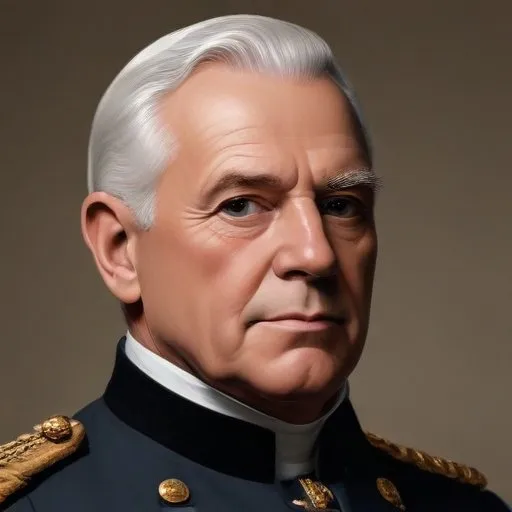
A Confederate general who fought in the American Civil War and later became a historian, writing about his experiences and the war's history. He also served as a politician in Louisiana.
Richard Taylor, a prominent figure in the American Civil War, was born on January 27, 1826, at Springfield, his family's plantation near Louisville, Kentucky, to Zachary Taylor, the 12th president of the United States, and Margaret Mackall Smith Taylor. Taylor was educated at private schools in Kentucky and Massachusetts before attending Harvard College in Cambridge, Massachusetts, and later graduating from Yale in New Haven, Connecticut, in 1845.
Taylor's military career commenced with the outbreak of the American Civil War, as he joined the Confederate States Army, serving initially as a brigade commander in Virginia and later as an army commander in the Trans-Mississippi Theater. Notably, he commanded the District of West Louisiana and opposed United States troops advancing through upper northwest Louisiana during the Red River Campaign of 1864, a pivotal moment in the war.
Following the war and Reconstruction, Taylor published a memoir about his experiences, providing a unique insight into the conflict and his role within it. As the son of a president and a prominent military figure, Taylor's legacy extends beyond his military accomplishments, with his written work offering a personal perspective on the tumultuous period in American history.
Taylor's life and career are inextricably linked with the American Civil War, a pivotal moment in the nation's history. As a Confederate general, Taylor's actions and decisions had significant consequences for the outcome of the war and the subsequent Reconstruction era. His experiences and perspectives, as documented in his memoir, provide a nuanced understanding of the complexities of the conflict and its lasting impact on the United States.
Taylor was part of a close-knit family, with five older sisters, and his life was heavily influenced by his father's military career. As a member of Skull and Bones, Yale's social club, Taylor's connections and relationships played a significant role in shaping his life and career.
In comparison to other Confederate generals, Taylor's unique perspective as the son of a president and his experiences in the Trans-Mississippi Theater set him apart. His literary contributions and historical significance are comparable to those of other notable figures of the era, including Jefferson Davis and Robert E. Lee.
Richard Taylor's life and career, marked by his military service and literary contributions, have had a lasting impact on the understanding of the American Civil War and its complex historical context. As a distinctive figure of the era, Taylor's experiences and perspectives continue to inform and educate scholars and historians today.
Born in 1784
The 12th President of the United States was a military hero who led the country to victory in the Mexican-American War, and later became a short-lived president. He's known for his strong leadership and sudden death in office.
Born in 1786
Led the United States Army to victory in the Mexican-American War and was a presidential candidate in 1852, known for his military strategy and leadership.
Born in 1822
Led the Union Army to victory in the Civil War and later became President, known for issuing the Emancipation Proclamation and strengthening federal authority.
Born in 1807
Led the Confederate States Army during the American Civil War, surrendering to Union forces at Appomattox, marking the war's effective end.
Born in 1824
A Confederate general during the American Civil War, he's renowned for his unconventional tactics and bravery, earning him a legendary status among military historians.
Born in 1808
The President of the Confederate States of America during the American Civil War, leading the secessionist movement and fighting to preserve slavery. He's infamous for his role in the Civil War and its aftermath.
Born in 1818
A Confederate general who played a pivotal role in the American Civil War, particularly during the Battle of Fort Sumter, and is often credited with starting the war.
Born in 1826
A Union general during the American Civil War, he's infamous for his cautious tactics and disagreements with President Lincoln, later becoming a governor of New Jersey.
