


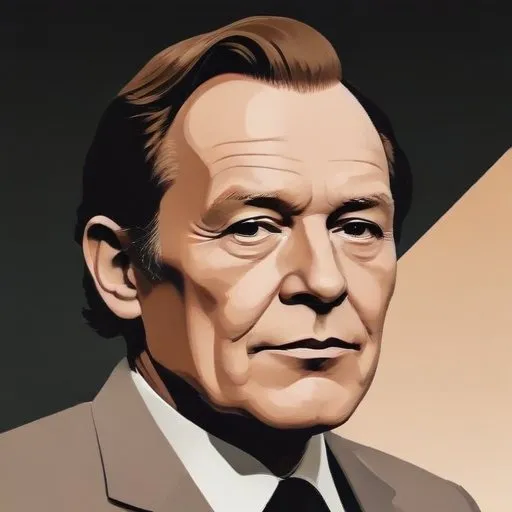
A celebrated poet, translator, and essayist, known for his mastery of traditional forms and witty, insightful explorations of everyday life. His work often blends humor and profundity, earning him numerous awards and accolades.
Richard Wilbur, one of the most celebrated American poets of the 20th century, was renowned for his mastery of traditional forms, elegant language, and wit. With a career spanning over five decades, Wilbur was a two-time Pulitzer Prize winner and the second Poet Laureate Consultant in Poetry to the Library of Congress, leaving an indelible mark on American literature.
Born on March 1, 1921, in New York City, Wilbur grew up in North Caldwell, New Jersey, surrounded by a family that encouraged his literary pursuits. He began publishing his poetry at the tender age of eight, with his first poem appearing in John Martin's Magazine. This early start paved the way for a lifetime of creative expression, as Wilbur went on to publish numerous volumes of poetry, translations, and children's books.
Wilbur's academic career was just as impressive as his literary one. He taught at esteemed institutions such as Wellesley College, Wesleyan University, and Smith College, sharing his passion for poetry with generations of students. His affiliation with the Wesleyan University Press led to the establishment of the award-winning poetry series, further cementing his role as a champion of American poetry.
In addition to his original work, Wilbur was a prolific translator, focusing on 17th-century French comedies and dramas. His translations of Molière's Tartuffe and Jean Racine's plays are still widely performed and studied today, introducing these classics to new audiences.
Wilbur's contributions to American literature were recognized with numerous awards and honors. He received two Pulitzer Prizes for Poetry, in 1957 and 1989, and was appointed the second Poet Laureate Consultant in Poetry to the Library of Congress in 1987. His poetry was celebrated for its technical skill, lyricism, and nuanced exploration of the human experience.
Wilbur's poetry and translations have had a profound impact on American literature, influencing generations of poets and writers. His commitment to traditional forms and mastery of language have inspired a range of writers, from formalists to free-verse poets. As a translator, he has helped to introduce classic works to new audiences, enriching the cultural landscape.
Through his teaching, writing, and translations, Richard Wilbur has left an enduring legacy, one that continues to inspire and enrich American literature.
"The universe is full of magical things, patiently waiting for our wits to grow sharper." - Richard Wilbur
Born in 1874
Pulitzer Prize-winning poet and playwright celebrated for rural New England-inspired works that explore human nature, morality, and the American experience.
Born in 1888
A renowned poet, playwright, and critic who reshaped modern poetry with works like "The Waste Land" and "Old Possum's Book of Practical Cats", influencing literature and art with their unique style.
Born in 1885
A pioneering modernist poet and critic who transformed 20th-century literature with innovative styles and provocative ideas, shaping the course of modern poetry.
Born in 1879
A modernist master of language and imagination, crafting innovative, symbolic poetry that explores the human experience and the relationship between reality and the individual's perception of it.
99 Years Old
A celebrated poet of the New York School, known for his surreal, dreamlike, and often humorous poetry that explores the human condition and the nature of language. His work is characterized by its complexity, wit, and playfulness.
Born in 1926
A prominent figure in the New York School of poets, known for his spontaneous, conversational style and poems that capture the essence of urban life and the human experience.
Born in 1926
Pulitzer Prize-winning poet and playwright known for his lyrical and introspective works that explored themes of love, identity, and the supernatural. His writing is celebrated for its technical mastery and emotional depth.
Born in 1923
A Pulitzer Prize-winning poet celebrated for his mastery of formal verse and exploration of themes like morality, history, and the human condition.
