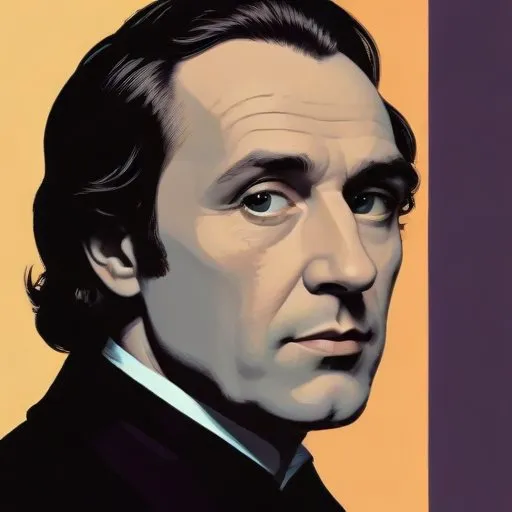
John Martin: The Master of Epic Landscapes and Visions of Apocalypse
A Celebrated Painter of the Unknown
John Martin was a renowned English painter, engraver, and illustrator, celebrated for his vast and dramatic paintings of religious subjects and fantastical compositions. His works, often populated with minute figures placed in imposing landscapes, enjoyed great success with the general public, earning him the title of the most popular painter of his day.
Early Life and Training
Born on July 19, 1789, in a small one-room cottage at Haydon Bridge, near Hexham in Northumberland, Martin was the fourth son of Fenwick Martin, a former fencing master. He was apprenticed to a coachbuilder in Newcastle upon Tyne to learn heraldic painting, but a dispute over wages led to the cancellation of his indentures. Instead, he was placed under the tutelage of Boniface Musso, an Italian artist, father of the enamel painter Charles Muss.
The Move to London and Early Career
In 1806, Martin moved to London with his master, where he married at the age of nineteen. To support himself, he gave drawing lessons and painted in watercolors, on china, and on glass. During his leisure time, he studied perspective and architecture. His only surviving painted plate, now in a private collection in England, is a testament to his early skills.
Rise to Prominence
Martin's career as an artist began to take off when he started painting sepia watercolors to supplement his income. In 1810, he sent his first oil painting to the Royal Academy, but it was not hung. However, in 1811, he sent the painting again, and it was finally exhibited under the title
A Landscape Composition as item no. 46 in the Great Room.
Major Works and Critical Acclaim
Martin's most famous works include
The Destruction of Sodom and Gomorrah,
The Fall of Babylon, and
The Great Day of His Wrath. These paintings showcase his unique style, characterized by dramatic lighting, vivid colors, and intricate details. While
Thomas Lawrence praised Martin's work,
John Ruskin and other critics lambasted him, accusing him of lacking artistic merit.
Personal Milestones and Key Life Events
Martin's personal life was marked by significant events, including his marriage at the age of nineteen and the trial of his brother, Jonathan, who set fire to York Minster in 1829.
Legacy and Impact
John Martin's legacy extends beyond his artistic contributions. He played a significant role in shaping the public's perception of art, making it more accessible and engaging for a wider audience. His work continues to inspire artists, writers, and filmmakers, influencing the genres of science fiction and fantasy.
Trivia and Fun Facts
- Martin's brothers were William, Richard, and Jonathan, each with their own unique careers and stories.
- He was known for his meticulous attention to detail, often spending years working on a single painting.
- Martin's paintings were often exhibited in public spaces, making art more accessible to the general public.
Conclusion
John Martin's epic landscapes and visions of apocalypse continue to captivate audiences to this day. His legacy is a testament to the power of art to inspire, educate, and entertain. As a celebrated painter of the unknown, Martin's work remains an integral part of the art historical canon, influencing generations of artists, writers, and filmmakers to come.
FAQ
What style of art did John Martin practice?
John Martin was a Romantic painter, known for his dramatic and apocalyptic depictions of biblical scenes and landscapes. His style was characterized by grandiose scale, vivid colors, and intense emotional power.
What are some of John Martins most famous works?
John Martins most famous works include The Destruction of Sodom and Gomorrah, The Fall of Babylon, and The Triumph of Christianity. These paintings showcase his mastery of composition, color, and technique.
How did John Martins art reflect his religious beliefs?
John Martins art was deeply influenced by his Christian beliefs, which he saw as a way to convey moral and spiritual truths. His paintings often depicted biblical scenes and themes, and he saw his art as a means of promoting spiritual awakening.
What impact did John Martins art have on the Romantic movement?
John Martins art was a key part of the Romantic movement in Britain, which emphasized emotion, imagination, and individualism. His paintings influenced a generation of artists and helped to shape the direction of Romantic art.
What legacy did John Martin leave behind in the art world?
John Martin left a lasting legacy in the art world as a pioneering figure of Romantic art. His paintings continue to inspire and awe audiences today, and his influence can be seen in many later artists who followed in his footsteps.