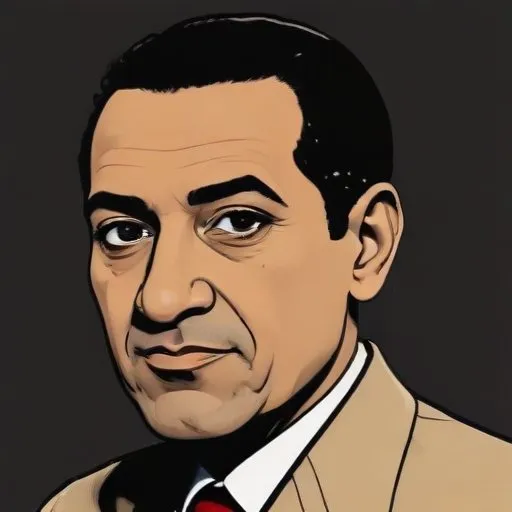
Rifaat elMahgoub: The Martyred Speaker of Egypt's House of Representatives
A Life of political activism and unwavering dedication to freedom
Rifaat elMahgoub, a prominent Egyptian politician, is best known for his role as the speaker of the House of Representatives of Egypt, a position he held until his assassination on October 12, 1990. Throughout his life, elMahgoub was a fierce advocate for freedom, democracy, and human rights, earning him both admiration and criticism from his contemporaries.
Early Life and Education
Born in Damietta, Egypt on April 23, 1926, elMahgoub received a law degree from Cairo University in 1949. He furthered his education by obtaining a PhD in economics from the prestigious Sorbonne University in Paris. This strong educational foundation laid the groundwork for his future political career.
Political Career and Contributions
ElMahgoub's political career began under the administration of President
Gamal Abdel Nasser, where he served as an official representative of universities in the Socialist Union. In 1962, he was appointed to the charter preparation committee and later became a member of the Socialist Union's Executive Bureau for the Cairo Governorate. His commitment to freedom and democracy was evident in his statement during the 1962 national congress, where he declared, "
Those who fear freedom are the fiercest enemies of freedom. Fear of freedom is an unforgivable crime."
Following a period of withdrawal from political action, elMahgoub was invited by President Anwar al-Sadat to participate in the Infitah policy phase, where he took on various teaching positions at Cairo University. He eventually became the dean of the faculty of Economics and Political Sciences in 1971.
Ministerial Appointments and Government Service
ElMahgoub's dedication to public service was marked by his appointments as Minister for Presidential Affairs in 1972 and Chairman of the committee supervising the restructuring of the Socialist Unions' organizations in 1975. He was also appointed Deputy Prime Minister in the same year.
Assassination and Legacy
On October 12, 1990, elMahgoub's life was cut short by an assassin's bullet. His martyrdom served as a testament to his unwavering commitment to democracy and human rights. Today, his legacy continues to inspire generations of Egyptians and beyond, serving as a beacon of hope for those fighting for freedom and justice.
Quotes and Memorable Sayings
ElMahgoub's words continue to resonate, offering a glimpse into his philosophy and unwavering dedication to freedom. Some of his notable quotes include:
- "Those who fear freedom are the fiercest enemies of freedom. Fear of freedom is an unforgivable crime."
Historical Context and Impact
ElMahgoub's life and career were marked by significant historical events and political shifts in Egypt. From the Nasser era to the Sadat presidency, he navigated the complexities of Egyptian politics, always remaining true to his principles. His assassination served as a turning point in Egypt's modern history, highlighting the ongoing struggle for democracy and human rights.
Rifaat elMahgoub's story is one of courage, conviction, and sacrifice. His legacy continues to inspire, reminding us of the importance of standing up for freedom and democracy, even in the face of adversity.
FAQ
What was Rifaat el-Mahgoubs role in Egyptian politics?
Rifaat el-Mahgoub was a prominent Egyptian politician who served as the Speaker of the Peoples Assembly of Egypt from 1984 to 2005. He was a key figure in the countrys political landscape during the presidency of Hosni Mubarak.
What were Rifaat el-Mahgoubs accomplishments as Speaker?
During his tenure as Speaker, el-Mahgoub oversaw several significant legislative reforms, including the privatization of state-owned enterprises and the liberalization of the economy. He also played a key role in shaping Egypts foreign policy.
How did Rifaat el-Mahgoubs experience influence his political views?
El-Mahgoubs early life, marked by poverty and hardship, shaped his commitment to social justice and economic development. His experiences as a lawyer and politician informed his approach to governance and policymaking.
What was Rifaat el-Mahgoubs stance on human rights?
El-Mahgoubs record on human rights is complex and controversial. While he was seen as a pragmatic politician who worked to maintain stability, he was also criticized for his role in suppressing political dissent and restricting civil liberties.
How did Rifaat el-Mahgoubs legacy impact Egyptian politics?
El-Mahgoubs legacy continues to influence Egyptian politics, with his policies and decisions remaining relevant to the countrys ongoing struggles with democracy, economic development, and human rights.