


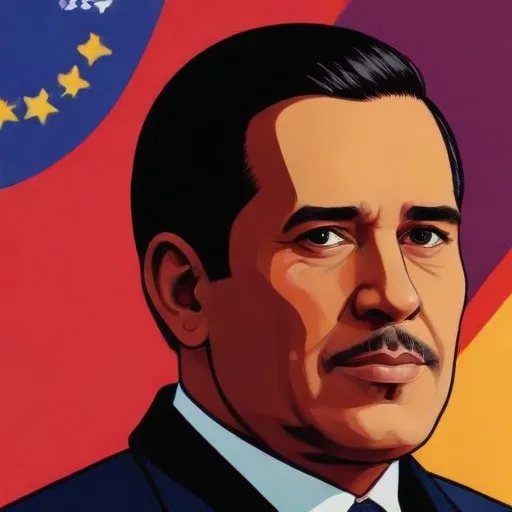
Led Venezuela's transition from dictatorship to democracy, serving as president from 1945 to 1948 and again from 1959 to 1964, implementing social and economic reforms.
Rómulo Betancourt, also known as "The Father of Venezuelan Democracy", is renowned for his instrumental role in shaping Venezuela's political landscape and establishing the country's democratic foundations. As the president of Venezuela from 1945 to 1948 and again from 1959 to 1964, Betancourt's leadership marked a significant turning point in the nation's history, solidifying his position as one of the most prominent figures in 20th-century Latin American politics.
Born on February 22, 1908, in Guatire, Venezuela, Betancourt's early life was marked by academic pursuits. He attended a private school in Guatire and later studied law at the Central University of Venezuela. This foundational education laid the groundwork for his future involvement in politics and his unwavering commitment to democratic principles.
In the early 1930s, Betancourt's political activism led to his expulsion from Venezuela, prompting him to seek refuge in Costa Rica. During this period, he became a key figure in the country's Communist Party, assuming a leadership role at the age of 22. However, he eventually resigned from the party and returned to Venezuela, where he founded the Partido Demócrata Nacional (PDN), which later became the influential political party Acción Democrática (AD).
Betancourt's first term as president, from 1945 to 1948, was marked by a series of impactful reforms. He implemented significant changes to the country's education system, introduced labor laws, and established the Venezuelan oil industry as a key driver of the national economy. His presidency also witnessed the creation of the National Electoral Council, solidifying the country's democratic institutions.
In 1948, a military coup d'état forcibly removed Betancourt from power, prompting him to seek exile in the United States. During this period, he continued to advocate for democratic principles, eventually returning to Venezuela in 1958. The following year, he successfully ran for president, securing a second term that lasted until 1964.
Rómulo Betancourt's enduring legacy extends far beyond his presidential terms. He is credited with establishing Venezuela as a modern, democratic nation, paving the way for future generations of Venezuelan leaders. His commitment to democratic values, social justice, and economic development has had a lasting impact on Venezuelan society, earning him the respect and admiration of his contemporaries and historians alike.
Betancourt's political philosophy was deeply rooted in democratic principles, social justice, and economic development. He firmly believed in the importance of education, advocating for increased access to quality education as a means of empowering the Venezuelan people.
Rómulo Betancourt's leadership and democratic vision have had a profound impact on modern Venezuelan society. His commitment to social justice, education, and economic development has inspired generations of Venezuelans, solidifying his position as a champion of democratic values.
In the broader context of Latin American history, Betancourt's leadership and democratic ideals have served as a beacon of hope, inspiring similar movements across the region. His legacy continues to influence contemporary Venezuelan politics, cementing his position as one of the most important figures in 20th-century Latin American history.
Born in 1884
A pioneering Venezuelan writer and statesman who served as president, known for his influential novels that explored the country's cultural identity and his brief but significant presidency.
72 Years Old
The charismatic leader who transformed Venezuela through socialist reforms and anti-imperialist rhetoric, leaving a lasting impact on the country's politics and economy.
Born in 1783
Led the Latin American wars of independence against Spanish rule, unifying several countries under the Gran Colombia republic. He's revered as a national hero and symbol of freedom.
Born in 1781
A leading figure in Latin American literature and philosophy, known for his influential poetry and essays that shaped the region's cultural identity. He's also credited with creating the modern Spanish language grammar rules.
Born in 1857
A Venezuelan strongman who ruled with an iron fist, modernizing the country while suppressing dissent, and amassing a vast fortune through oil concessions. He's remembered for his authoritarian regime and economic development.
