


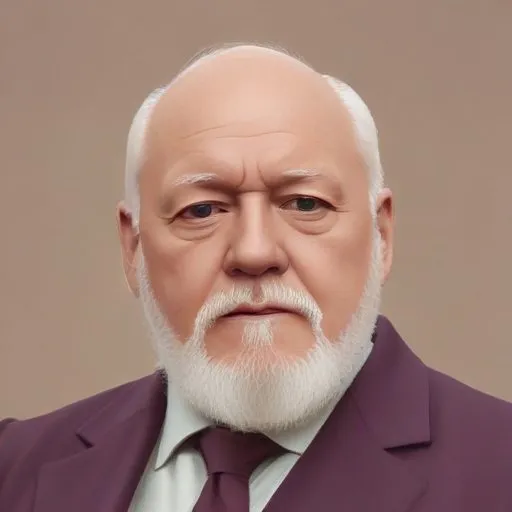
A countercultural icon who explored the realms of consciousness, paranoia, and conspiracy theories through his writings, blending psychology, philosophy, and humor. His works are a gateway to alternative perspectives and unconventional thinking.
Robert Anton Wilson, a maverick thinker and writer, is best known for his unconventional approach to understanding the nature of reality. Through his influential works, he challenged conventional thinking and encouraged readers to question everything, from the notion of authority to the fabrics of space and time.
Born Robert Edward Wilson on January 18, 1932, in Brooklyn, New York, Wilson's early life was marked by a series of unusual events. At the age of five, he contracted polio, a disease that would leave him with lifelong physical limitations. However, it was his remarkable recovery, thanks to the unorthodox Kenny Method, that sparked his fascination with the human mind and its incredible potential.
In the 1970s, Wilson emerged as a leading figure in the countercultural movement, alongside icons like Timothy Leary and Terence McKenna. His writings, infused with a healthy dose of skepticism and humor, resonated with a generation eager to challenge authority and explore the boundaries of human consciousness.
Wilson's philosophy was rooted in his concept of "agnosticism about everything." He believed that no single model or theory could ever capture the complexity of reality, and that individuals should strive to approach the world with a open, curious, and skeptical mindset.
Through his writings, Wilson aimed to "break down conditioned associations" and encourage readers to explore alternative perspectives. He was particularly interested in the intersection of psychology, philosophy, and quantum mechanics, and his work continues to inspire new generations of thinkers and seekers.
Wilson's influence extends far beyond the countercultural movement of the 1970s. His ideas have inspired artists, writers, and musicians, and continue to shape contemporary thought on everything from conspiracy theories to the nature of consciousness.
"The universe is not only stranger than we think, it is stranger than we can think."
"The borderline between prose and poetry is fuzzy, and I like to fuzz it further."
Robert Anton Wilson's life and work serve as a testament to the power of radical thinking and the importance of challenging authority. His ideas continue to inspire and provoke, and his legacy ensures that future generations will continue to question, seek, and explore the mysteries of the universe.
Born in 1920
A pioneer in the counterculture movement, he advocated for the therapeutic use of psychedelic drugs and became a symbol of the 1960s rebellion. His ideas continue to influence modern thought on consciousness and personal freedom.
Born in 1914
A pioneering figure of the Beat Generation, known for experimental and provocative works that blended fiction and reality, pushing boundaries of literature and art.
Born in 1926
A leading figure of the Beat Generation, known for his poetry that explores themes of nonconformity, free expression, and social justice. His iconic poem "Howl" is a classic of American literature.
Born in 1923
Pulitzer Prize-winning author and journalist who explored American politics and culture through provocative novels and essays, known for his bold, lyrical writing style.
97 Years Old
Pioneering science fiction author and philosopher who explored the nature of reality, identity, and humanity through thought-provoking novels and short stories. His works often delved into the consequences of advanced technology and alternate realities.
94 Years Old
A renowned Italian intellectual who wrote bestselling novels like "The Name of the Rose" and "Foucault's Pendulum", blending mystery, history, and philosophy, while also being a prominent literary critic and philosopher.
79 Years Old
A counterculture icon who explored the boundaries of psychedelics, consciousness, and the human experience through writings and lectures. He's famous for his theories on the role of psychoactive substances in shaping human culture and evolution.
