


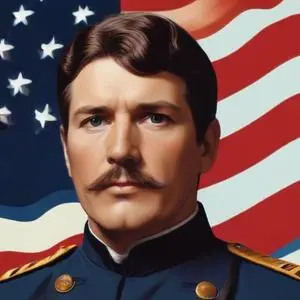
Led the first formal unit of the Union Army during the American Civil War, known as the 54th Massachusetts Infantry, composed of African American soldiers. He fought for equality and justice, giving his life in the assault on Fort Wagner.
Robert Gould Shaw is best known for his bravery and leadership as the commanding officer of the first all-black regiment in the Union Army, the 54th Massachusetts Infantry, during the American Civil War. He led his men in the ill-fated assault on Fort Wagner in July 1863, a battle that would cement his legacy as a champion of equal rights and justice.
Shaw was born on October 10, 1837, in Dartmouth, Massachusetts, to Francis George and Sarah Blake Sturgis Shaw, prominent abolitionists and philanthropists. His family's wealth and influence provided him with a unique upbringing, allowing him to travel and study in Europe during his teenage years.
Shaw's parents instilled in him a strong sense of morality and social responsibility, which would shape his future actions and decisions. His father, Francis, was a close friend and ally of prominent abolitionists, including William Lloyd Garrison and Frederick Douglass.
In 1863, Shaw accepted the command of the 54th Massachusetts Regiment, the first all-black regiment in the Union Army. He believed in the importance of equal treatment for his troops and advocated for their right to receive the same pay as white soldiers. Shaw's leadership and commitment to his men earned their respect and admiration, and he soon became a revered figure among his troops.
Shaw's regiment was tasked with leading the assault on Fort Wagner, a Confederate stronghold in South Carolina. Despite being outnumbered and outgunned, Shaw led his men in a valiant charge on July 18, 1863. Although the battle was ultimately unsuccessful, Shaw's bravery and sacrifice inspired hundreds of thousands of African Americans to enlist in the Union Army, helping to turn the tide of the war.
Shaw's heroic actions at Fort Wagner made him a legendary figure in American history. His story was immortalized in the 1989 Oscar-winning film Glory, which tells the story of the 54th Massachusetts Regiment and its heroic leader.
Today, Robert Gould Shaw is remembered as a champion of equal rights and justice, a true hero of the American Civil War. His legacy continues to inspire generations, reminding us of the importance of standing up against injustice and fighting for what is right.
Shaw's leadership and sacrifice took place during a pivotal moment in American history, as the country grappled with the issue of slavery and racial equality. His actions helped to shift public opinion and paved the way for the Emancipation Proclamation and the eventual abolition of slavery.
Today, Shaw's legacy serves as a reminder of the ongoing struggle for racial equality and justice in America. His bravery and commitment to his men continue to inspire new generations of leaders and activists, ensuring that his memory will never be forgotten.
Born in 1800
Abolitionist who led the raid on Harpers Ferry, a pivotal event that helped spark the American Civil War, fighting to end slavery through radical action.
Born in 1809
Led the United States through its Civil War and ultimately abolished slavery, leaving a lasting legacy in American history.
Born in 1822
Led the Union Army to victory in the Civil War and later became President, known for issuing the Emancipation Proclamation and strengthening federal authority.
Born in 1820
A renowned Union general during the American Civil War, he's infamous for his scorched earth tactics and march through the Confederacy, leaving destruction in his wake.
Born in 1828
A heroic figure who led the 20th Maine Infantry Regiment to victory at Gettysburg, and later served as Governor of Maine, known for his bravery and leadership during the American Civil War.
