


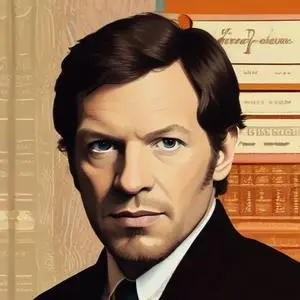
Renowned author of self-help and strategy books, including "The 48 Laws of Power" and "The Art of Seduction", offering insightful advice on achieving success and understanding human nature.
Robert Greene is a renowned American author known for his thought-provoking books on strategy, self-improvement, and philosophy. He is widely recognized for his bestselling books, including The 48 Laws of Power, The Art of Seduction, and The 33 Strategies of War, which have been translated into over 30 languages and have sold millions of copies worldwide.
Born in 1959, Robert Greene grew up in Los Angeles, California. He attended the University of California, Berkeley, where he studied classical studies and philosophy. After completing his undergraduate degree, he went on to pursue his master's degree in fiction writing from the University of Iowa.
Robert Greene's writing career spans over three decades, during which he has written eight bestselling books. His first book, The 48 Laws of Power, published in 1998, became a huge success and established him as a leading authority on strategy and self-improvement. He has since written several other influential books, including:
Robert Greene's work is deeply rooted in philosophy, drawing inspiration from the likes of Sun Tzu, Machiavelli, and Napoleon Bonaparte. He believes that understanding human nature and the laws of power is crucial for achieving success and living a fulfilling life. His writing emphasizes the importance of self-awareness, strategic thinking, and emotional intelligence in navigating the complexities of life.
Robert Greene's books have had a profound impact on modern society, influencing the way people think and approach their personal and professional lives. His work has been widely read and applied by individuals from diverse backgrounds, including entrepreneurs, artists, athletes, and politicians. He has also been featured in various media outlets, including The New York Times, Wall Street Journal, and NPR.
Robert Greene's personal life is marked by simplicity and a strong work ethic. He is known for his intense focus on writing and research, often spending years on each book. He currently lives in Los Angeles, where he continues to write and work on new projects.
Robert Greene is renowned for his thought-provoking quotes and sayings. Here are a few notable ones:
Through his work, Robert Greene continues to inspire and empower individuals to live strategically, think critically, and strive for mastery in their chosen fields.
Born in 1469
Italian historian and philosopher who wrote "The Prince", a seminal work on politics and power that still influences modern leadership and governance today.
Born in 1561
A 16th-17th century Renaissance figure who pioneered the scientific method and empiricism, and served as a prominent government official.
Born in 1533
A 16th-century French philosopher and writer who pioneered the essay as a literary form, exploring human nature, morality, and the human experience through personal anecdotes and philosophical musings.
Born in 1601
A 17th-century Spanish priest and author who wrote witty, insightful, and influential books on philosophy, politics, and psychology, offering timeless advice on living a virtuous life.
Born in 1788
A pessimistic philosopher who wrote about the human condition, emphasizing the struggles and sufferings of life, and is famous for his concept of the "will to life".
Born in 1712
A pioneering thinker who shaped modern democracy and education with his ideas on social contracts, general will, and the importance of early childhood education. His writings influenced the French Revolution and modern political thought.
