


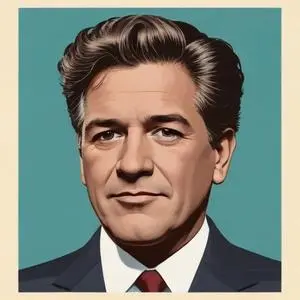
A pioneering progressive politician who fought for workers' rights, social justice, and government accountability, leaving a lasting legacy in American politics.
Robert M. La Follette is renowned for his unwavering commitment to progressive ideals, earning him a reputation as a trailblazing politician and champion of the common man. His storied career spanned multiple decades, during which he left an indelible mark on American politics, shaping the country's trajectory with his unwavering dedication to social and economic reform.
La Follette's journey in politics began in 1880, when he was elected as the Dane County District Attorney. He later served in the House of Representatives from 1885 to 1891, where he formed close relationships with influential leaders like William McKinley. Following a brief hiatus, he rebounded as a populist, building a coalition of disaffected Republicans who shared his progressive vision.
His most notable achievements came during his tenure as Governor of Wisconsin from 1901 to 1906, where he implemented a range of groundbreaking reforms, including:
La Follette's progressive ideology has had a lasting impact on American society, shaping the country's political landscape and inspiring future generations of reformers. His unwavering commitment to social justice and economic equality helped pave the way for:
La Follette's philosophical underpinnings were deeply rooted in progressive ideals, emphasizing the importance of:
La Follette's life and work were deeply intertwined with the turbulent events of his time, including the Industrial Revolution, World War I, and the Roaring Twenties. His legacy continues to inspire Americans today, serving as a beacon of hope for those seeking to reform the political system and promote a more just and equitable society.
Born on June 14, 1855, in Primrose, Wisconsin, La Follette's life was marked by significant milestones, including:
La Follette's eloquence and conviction are captured in his memorable quotes, including:
"The struggle is not for the perpetuation of the Republican Party, but for the preservation of the liberties of the people."
Honoring his life and work, La Follette's legacy continues to inspire Americans to strive for a more perfect union, embodying the spirit of progress and reform that defined his remarkable career.
Born in 1858
A pioneering leader who championed progressive reforms, trust-busting, and conservation, earning a Nobel Peace Prize for mediating the Russo-Japanese War. He's also famous for his rugged outdoorsmanship and "big stick" diplomacy.
Born in 1856
The 28th President of the United States, a Nobel Peace Prize winner, and a historian who played a key role in shaping international relations and global governance after World War I. He's most known for his idealistic vision of a League of Nations and his efforts to promote peace and diplomacy.
Born in 1855
A pioneering labor leader who fought for workers' rights and social justice, founding the Industrial Workers of the World and running for president five times on the Socialist Party ticket.
Born in 1860
A prominent lawyer and politician who served as Secretary of State, famously advocating for progressive reforms and delivering the iconic "Cross of Gold" speech. He's also known for his role in the Scopes Trial, debating evolution in schools.
Born in 1882
Led the United States through the Great Depression and World War II, implementing a series of reforms known as the New Deal and helping to establish the country as a global superpower.
Born in 1874
The 31st President of the United States was a humanitarian and politician who led the country through the Great Depression and is known for his humanitarian efforts and infrastructure development. He's also infamous for his inability to mitigate the economic crisis.
Born in 1872
The 30th President of the United States, a lawyer and politician, led the country through a period of economic prosperity and limited government intervention, earning the nickname "Silent Cal" for his frugal and humble nature. He's most known for his minimalist approach to governance and tax cuts.
Born in 1865
The 29th President of the United States, a journalist-turned-politician, led the country through a period of post-war prosperity and scandalous corruption. He's infamous for his administration's numerous scandals and his own extramarital affairs.
