


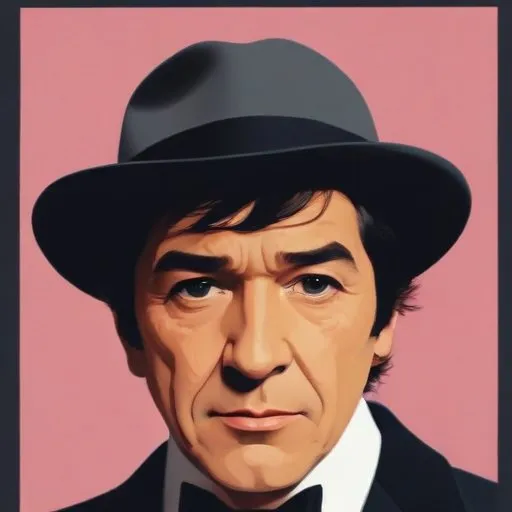
A swashbuckling actor who brought iconic characters to life, including Long John Silver in Disney's "Treasure Island" and a memorable screen presence in many classic films.
Robert Newton is best known for his iconic portrayal of Long John Silver in the 1950 Disney adaptation of Treasure Island, a role that has become synonymous with swashbuckling pirates and remains the standard for screen portrayals of historical pirates. His exaggerated West Country accent also popularized the stereotypical pirate speech, earning him the title of patron saint of the annual International Talk Like a Pirate Day.
Robert Guy Newton was born on June 1, 1905, in Shaftesbury, Dorset, to landscape painter Algernon Newton, R.A. He spent his early years in Lamorna, near Penzance, Cornwall, before attending St. Petroc's preparatory school in Bude, Exeter School, and St. Bartholomew's School in Newbury, Berkshire.
Newton's acting career began in the 1920s, with numerous appearances in West End plays, including Noel Coward's Bitter Sweet. He made his breakthrough in 1939, playing Horatio in Hamlet at the Old Vic theatre opposite Laurence Olivier's Prince Hamlet. After serving in the Royal Navy during World War II, he landed his first major film role in This Happy Breed (1944) and starred in Olivier's version of Henry V (1944), earning him a spot as the 10th most popular British film star of 1944.
Newton's most enduring role, however, was that of Long John Silver in Treasure Island, which catapulted him to international stardom. He reprised the role in the 1954 film Long John Silver, which spawned a miniseries in the mid-1950s. He also played Edward Teach, aka Blackbeard, in Blackbeard the Pirate (1952).
Newton's legacy extends beyond the silver screen. He has inspired generations of actors, including Oliver Reed and Keith Moon, who cited him as a role model. His iconic pirate persona has become an integral part of popular culture, with his "arrrs" and "shiver me timbers" becoming an integral part of pirate lore.
Newton was known for his hard-living lifestyle, which often made headlines. Despite his tumultuous personal life, he remained a beloved figure in British cinema, earning the admiration of audiences and critics alike.
Newton's contributions to film and theatre were recognized with numerous awards and honors, including his appointment as a Fellow of the Royal Society of Arts.
Newton's swashbuckling spirit and unforgettable performances have cemented his place as one of the most beloved actors of his era, ensuring that his legacy will continue to entertain and inspire audiences for generations to come.
Born in 1913
A renowned English actor, starring in iconic films like "Brief Encounter" and "The Third Man", bringing depth and nuance to his characters.
Born in 1921
A renowned actress of Hollywood's Golden Age, starring in iconic films like "From Here to Eternity" and "The King and I", earning six Academy Award nominations.
Born in 1897
A talented actor and singer who starred in numerous classic films, including the iconic "Forbidden Planet," and won an Honorary Academy Award for his contributions to the industry.
Born in 1904
A renowned actress of Hollywood's Golden Age, starring in iconic films like "Mrs. Miniver" and "Random Harvest," earning seven Academy Award nominations.
Born in 1910
A dashing British actor and war hero, starring in iconic films like "Around the World in 80 Days" and "Separate Tables", earning him an Academy Award.
Born in 1904
Debonair leading man of Hollywood's Golden Age, starring in iconic romantic comedies and dramas, known for suave charm and witty banter.
Born in 1915
A legendary actress who captivated audiences with her natural, emotional performances in films like "Casablanca" and "Autumn Sonata", earning her three Academy Awards.
Born in 1899
Iconic leading man of classic Hollywood cinema, starring in timeless films like Casablanca and The African Queen, embodying a tough, charismatic on-screen presence.
