


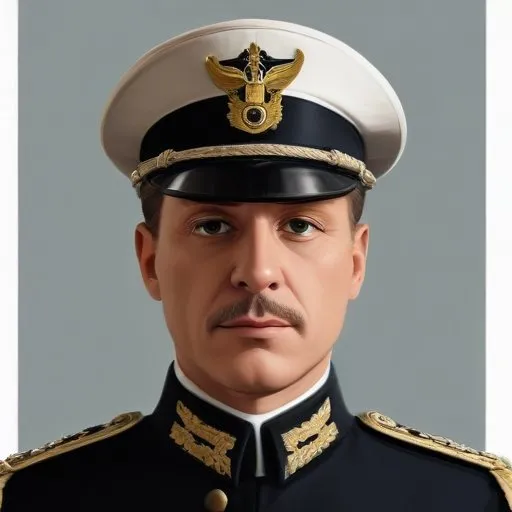
A highly decorated Luftwaffe pilot and commander, known for being the last commander of the Luftwaffe during World War II and flying Hitler out of Berlin in 1945.
Robert Ritter von Greim was a German Generalfeldmarschall (Field Marshal) and a renowned flying ace of World War I, who gained recognition as the last person to be promoted to the esteemed rank of Field Marshal in the German armed forces. In the final days of World War II, Adolf Hitler appointed Greim as the Commander-in-Chief of the Luftwaffe, the German air force, after Hermann Göring's dismissal for treason.
Born on June 22, 1892, in Bayreuth, Kingdom of Bavaria, Robert Greim was the second son of police Hauptmann Ludwig Greim and his wife Marie. He attended the Bavarian Cadet Corps, graduating with an Abitur, and later joined the Bavarian Army in 1911. During his officer training, Greim was posted to the Royal Bavarian 8th Field Artillery Regiment, where he received his commission as a Leutnant (Second Lieutenant) in 1913.
When World War I broke out in August 1914, Greim's regiment was subordinated to the 6th Army. He received the Bavarian Military Merit Order 4th Class in April 1914 for his service with the ammunition column of 1st battalion of his 8th Field Artillery Regiment. Greim's bravery and military prowess earned him recognition, and he became a flying ace, credited with 28 aerial victories during the war.
After the war, Greim continued to serve in the German military, rising through the ranks. During World War II, he played a crucial role as a commander in the Luftwaffe, leading various air fleets and corps. In April 1945, Hitler appointed Greim as the Commander-in-Chief of the Luftwaffe, replacing Hermann Göring, who had been dismissed for treason.
After the surrender of Nazi Germany in May 1945, Greim was captured by the Allies. He was imprisoned in an American-controlled prison, where he took his own life on May 24, 1945.
Robert Ritter von Greim's life and career are a testament to his bravery, military prowess, and leadership abilities. As the last German Field Marshal of World War II, his legacy is a reminder of the complexities and tragedies of war. Greim's story serves as a cautionary tale, highlighting the human cost of conflict and the importance of promoting peace and understanding.
Greim's remarkable life story serves as a reminder of the importance of learning from history, promoting peace, and honoring the sacrifices of those who have served.
"The greatest glory in living lies not in never falling, but in rising every time we fall."
This quote, attributed to Robert Ritter von Greim, reflects his resilience and determination, which defined his military career and personal life.
Born in 1893
A high-ranking Nazi official, he was a decorated World War I fighter pilot and later became a prominent politician, serving as Minister President of Prussia. He's infamous for his role in the Nazi regime and war crimes trials.
Born in 1876
A German naval leader who played a key role in the Kriegsmarine during World War II, overseeing the German U-boat fleet and naval operations. He was a close advisor to Adolf Hitler and implemented the German naval strategy during the war.
Born in 1891
A German naval commander who led the U-boat fleet during World War II and briefly served as President of Germany after Hitler's death, known for his role in the war and its aftermath.
Born in 1900
Leading the SS and Gestapo, he oversaw the Nazi regime's brutal security apparatus and implemented the "Final Solution," orchestrating the genocide of six million Jews during World War II.
Born in 1893
A German diplomat who served as the Nazi regime's Foreign Minister, orchestrating key alliances and treaties that led to World War II. He was a close associate of Adolf Hitler and played a crucial role in shaping Nazi foreign policy.
Born in 1892
A highly decorated Luftwaffe fighter ace and general, known for his exceptional flying skills and leadership during World War II, earning him numerous awards and accolades.
