


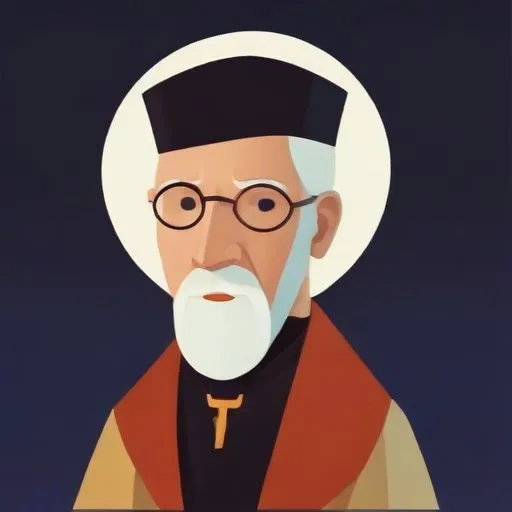
A Scottish clergyman and inventor who developed the Stirling engine, a highly efficient heat engine that converts thermal energy into mechanical work. His design has been used in various applications, including cryogenics and space exploration.
Robert Stirling, a Scottish clergyman and engineer, is renowned for inventing the Stirling engine, a groundbreaking innovation that transformed the world of energy conversion. This pioneering achievement has earned him a place in the Scottish Engineering Hall of Fame in 2014.
Born on October 25, 1790, at Fatal Fields, near the village of Methven, Perthshire, Scotland, Robert Stirling was part of the notable Dublane side of the Stirling family. His father, Patrick, was an inventor and experimenter in industrial agricultural equipment, and his grandfather, Michael, invented the threshing machine. This family legacy of innovation instilled in Robert a natural inclination for engineering.
Despite his passion for engineering, Robert pursued divinity studies at Edinburgh University in 1805, with the aim of becoming a minister. He later continued his studies at Glasgow University, where he delved into classics, philosophy, theology, and mathematics. This unconventional educational path laid the foundation for his unique blend of spiritual and scientific pursuits.
In 1816, Robert was licensed to preach in the Church of Scotland, and he went on to serve as a minister in various parishes, including Laigh Kirk and Galston Parish Church. His dedication to his ministerial duties did not relinquish his passion for engineering. In fact, it was during his ministerial years that he developed the Stirling engine, a game-changing innovation that harnesses the power of heat to generate mechanical energy.
The Stirling engine, patented in 1816, was a groundbreaking invention that utilized the principle of heat expansion to generate power. This engine, which could run on minimal fuel, was a significant improvement over traditional steam engines, which were inefficient and polluting. The Stirling engine's potential to transform industries and provide clean energy earned Robert recognition as one of the fathers of hot air engines.
In 1819, Robert married Jane Rankine, and they had seven children together. Throughout his life, Robert's commitment to his ministerial duties and his passion for engineering coexisted in harmony. His legacy extends beyond his invention, as he has inspired generations of engineers, scientists, and innovators.
In 2014, Robert Stirling was posthumously inducted into the Scottish Engineering Hall of Fame, a testament to his enduring impact on the world of engineering and energy conversion.
The Stirling engine has had a profound influence on modern society, paving the way for the development of sustainable energy solutions and inspiring new generations of innovators. Robert Stirling's contribution to the field of engineering has left an indelible mark on our collective pursuit of a cleaner, more efficient, and sustainable future.
Born in 1736
Improved steam engine efficiency, revolutionizing industry and transportation. Known for his innovative designs and patents that transformed the Industrial Revolution.
Born in 1731
A pioneering scientist who discovered hydrogen and determined the density of the Earth, making significant contributions to the fields of chemistry and physics.
Born in 1728
Discovered magnesium and isolated carbon dioxide, making significant contributions to the field of chemistry.
Born in 1726
Pioneering geologist and physician who formulated the theory of uniformitarianism, proposing that the Earth's geological features were shaped by slow, gradual processes over millions of years.
Born in 1925
A talented actress who shone in Hollywood's Golden Age, starring in iconic films like "High Sierra" and "Yankee Doodle Dandy" alongside James Cagney and Humphrey Bogart.
Born in 1791
Pioneering scientist who discovered electromagnetic induction, formulated the laws of electrolysis, and invented the first electrical generator, revolutionizing our understanding of electricity and its applications.
