


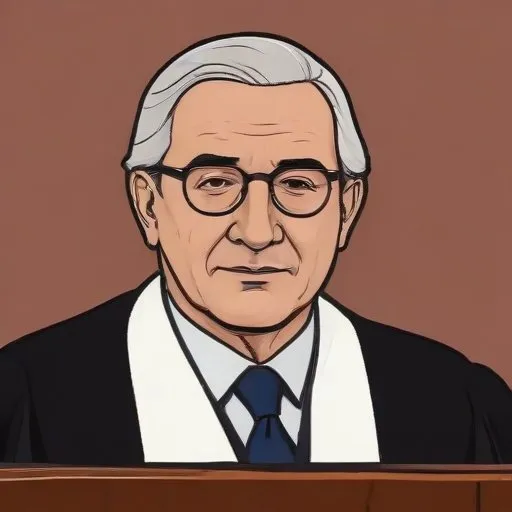
The 11th Chief Justice of Canada, a prominent figure in the country's judiciary, known for shaping the nation's legal landscape and upholding the Constitution. He played a crucial role in significant court decisions, leaving a lasting impact on Canadian law.
Robert Taschereau is renowned for being the 11th Chief Justice of Canada, a position he held with distinction from 1963 to 1967. During his tenure, he briefly served as the Administrator of the Government of Canada, marking a significant milestone in the country's history.
Born on September 10, 1896, in Quebec City, Taschereau was part of a family steeped in politics and law. His father, Louis-Alexandre Taschereau, would later become the Premier of Quebec, while his grandfather, Jean-Thomas Taschereau, was a judge on the Supreme Court of Canada. Taschereau pursued his education at Laval University, earning a B.A. degree in 1916 and an LL.L. in 1920.
Following a successful career as a lawyer, Taschereau entered politics as a Liberal and won a seat in the Quebec National Assembly in 1930. He represented the riding of Bellechasse until his retirement in 1936. On February 9, 1940, he was appointed to the Supreme Court of Canada, filling the vacancy created by the death of his former law partner, Lawrence Cannon.
In 1946, Taschereau and fellow Justice Roy Kellock conducted the Royal Commission on Spying Activities in Canada, prompted by the Gouzenko Affair. This experience would later inform his judicious approach to complex cases.
In 1963, Taschereau was promoted to Chief Justice, a position he held until 1967. During this period, he played a crucial role in shaping the country's judicial landscape.
Following the death of Governor General Georges Vanier in 1967, Taschereau served as the Administrator of the Government of Canada, ensuring a seamless transition until the appointment of Roland Michener as the new governor general.
Taschereau was married to Ellen Donohue, daughter of Joseph Timothy Donohue, co-founder of Donohue Inc. The couple had a fulfilling personal life, with Taschereau being known for his strong family values.
In 1967, Taschereau was made a Companion of the Order of Canada, a testament to his outstanding contributions to the country. He passed away on July 26, 1970, at the age of 73, leaving behind a rich legacy in the world of law and politics.
Robert Taschereau's remarkable life is a testament to his dedication to justice, politics, and public service. His contributions continue to inspire future generations of jurists, politicians, and Canadians alike.
Born in 1897
A Canadian leader who served as Prime Minister and won the Nobel Peace Prize for resolving the Suez Canal Crisis, known for his diplomatic efforts and peacekeeping initiatives.
Born in 1919
The charismatic leader who championed Canadian unity and implemented progressive policies, known for his iconic style and influential legacy in shaping modern Canada.
92 Years Old
The 20th Prime Minister of Canada, serving from 1993 to 2003, known for his leadership during the Quebec sovereignty movement and his role in shaping Canada's national unity. He implemented policies like the Clarity Act and the National Child Benefit.
45 Years Old
American professional ice hockey player who won two Stanley Cup championships and was a four-time NHL All-Star. Known for his rugged defensive play and physical presence on the ice.
87 Years Old
The 18th Prime Minister of Canada, a skilled lawyer and politician, led the country from 1984 to 1993, known for negotiating the Canada-US Free Trade Agreement and introducing the Goods and Services Tax.
79 Years Old
The first and only female Prime Minister of Canada, serving for a brief four months in 1993, known for her efforts to reform the country's justice system. She was also a strong advocate for women's rights and gender equality.
97 Years Old
The 17th Prime Minister of Canada, serving from 1984 to 1985, is most known for his brief tenure and struggles to maintain party unity. He's also recognized for his prior role as Minister of Justice, where he introduced significant reforms.
Born in 1882
The 12th Prime Minister of Canada, a strong leader who played a crucial role in shaping the country's post-war economy and foreign policy, and is credited with establishing universal hospital insurance and old-age pensions.
