


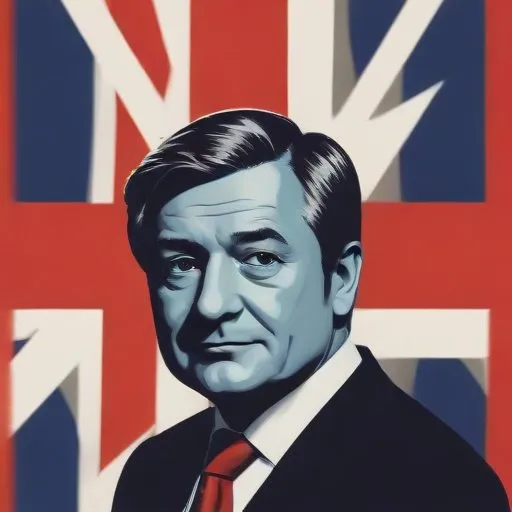
A 17th-century English politician who served as a Member of Parliament and was involved in the English Civil War, known for his strong royalist stance.
Robert Wallop, an English politician, is remembered for his pivotal role in the English Civil War, particularly as one of the regicides of King Charles I of England. As a staunch supporter of the Parliamentary cause, Wallop's actions shaped the course of British history, earning him a place in the annals of time.
Born on 20 July 1601, Robert Wallop was the only son of Sir Henry Wallop of Farleigh Wallop, Hampshire, and his wife, Elizabeth Corbet, daughter of Robert Corbet of Moreton Corbet, Shropshire. This noble lineage would later influence Wallop's career and decisions.
Wallop's political journey began in 1621 when he was elected Member of Parliament for Andover. He was re-elected in 1624 and later represented Hampshire in 1625 and 1626. His commitment to the Parliamentary cause led to his re-election in 1628, a position he held until 1629 when King Charles I decided to rule without parliament for eleven years.
In 1640, Wallop was re-elected for the Short Parliament and later for the Long Parliament, where he continued to oppose the king's decisions. His defiance earned him a place among the 59 commissioners who sat in judgment at the trial of Charles I. Wallop attended the trial and later became a member of the Council of State in 1649 and 1650 under the Commonwealth.
The trial of Charles I, which took place from 20 to 27 January 1649, was a turning point in English history. Wallop, along with other commissioners, sat in judgment of the king, ultimately leading to his execution. Although Wallop did not sign the death warrant, his participation in the trial cemented his place as one of the regicides.
Robert Wallop's actions during the English Civil War and his role in the trial of Charles I have left an indelible mark on British history. His commitment to the Parliamentary cause and his defiance of the monarch paved the way for the establishment of the Commonwealth. Although his legacy is complex and multifaceted, Wallop remains an important figure in English history, remembered for his bravery and conviction.
Through his life and actions, Robert Wallopleft an indelible mark on English history, shaping the course of politics and governance for generations to come.
Born in 1676
The first Prime Minister of the United Kingdom, serving from 1721 to 1742, known for establishing the office of Prime Minister and setting important precedents for the role. He is also recognized for his skill in managing Parliament and his role in shaping British politics.
Born in 1484
A German nobleman who ruled Brandenburg-Ansbach from 1486 to 1515, known for his military campaigns and territorial expansions. He played a significant role in shaping the region's history.
Born in 1895
The second son of King George V, unexpectedly ascended to the throne after his brother's abdication, and led Britain through World War II with courage and determination. He's iconic for his leadership during wartime and his struggles with stuttering.
Born in 1725
Chancellor of the Exchequer who imposed taxes on British American colonies, sparking widespread protests and contributing to the American Revolution.
Born in 1749
A prominent 18th-century politician who championed individual liberties and opposed British imperialism, known for his charismatic oratory skills and influential foreign policy decisions.
Born in 1694
The Prime Minister who led Britain through a period of relative peace and stability, and is often credited with being the first Prime Minister in the modern sense, holding office from 1743 to 1754.
