


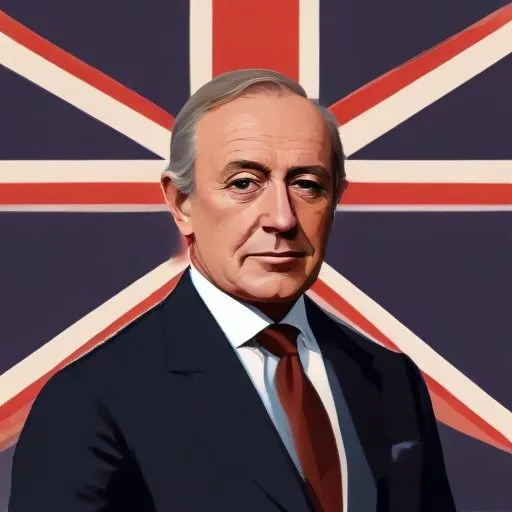
Chancellor of the Exchequer who imposed taxes on British American colonies, sparking widespread protests and contributing to the American Revolution.
Townshend was born at Raynham Hall in Norfolk, England, as the second son of Charles Townshend, 3rd Viscount Townshend, and Audrey Harrison. A sickly child, he suffered from epilepsy and had a strained relationship with his parents. Despite these challenges, Townshend graduated from Leiden University in 1745, where he associated with a group of influential English youths, including Dowdeswell, Wilkes, and Alexander Carlyle.
Townshend's political career began in 1746, representing Great Yarmouth in Parliament. He later switched to Saltash in 1756 and finally settled in Harwich in 1761. Throughout his tenure, Townshend held various titles, including member of the Board of Trade, Lord of the Admiralty, Paymaster of the Forces, and Chancellor of the Exchequer.
In 1767, Townshend proposed the Townshend Acts, a series of taxes on glass, paint, paper, and tea imported to the American colonies. These acts were met with fierce resistance, sparking boycotts, protests, and violence. The Sons of Liberty, a group of American patriots, played a significant role in opposing the acts, which ultimately contributed to the American Revolution.
Townshend married Caroline Campbell, who later became the Baroness Greenwich. His brother, George Townshend, became the Lord Lieutenant of Ireland. Despite his controversial legacy, Townshend's contribution to American history is undeniable. He died on September 4, 1767, but his actions continue to shape the course of American politics.
Townshend's policies were widely criticized by American colonists, who viewed them as an attack on their autonomy and economic well-being. The acts were seen as a symbol of British tyranny, sparking widespread outrage and discontent. Even in contemporary times, Townshend's legacy remains controversial, with many regarding him as a symbol of colonial oppression.
The Townshend Acts had far-reaching consequences, not only contributing to the American Revolution but also shaping the course of American politics and history. The acts highlighted the importance of taxation, representation, and autonomy, laying the foundation for the United States' eventual independence.
Townshend's actions were rooted in his belief that the British government had the right to tax its colonies. He saw the colonies as subjects of the Crown, rather than independent entities. This worldview clashed with the emerging American identity, which emphasized self-governance and autonomy.
In contrast to other British politicians of the time, Townshend's policies were unusually draconian and provocative. While other politicians, like Benjamin Franklin, advocated for compromise and dialogue, Townshend's actions were characterized by a more authoritarian and dismissive approach.
The Townshend Acts have been referenced in various forms of media, including films, literature, and music. The acts have become a cultural touchstone, symbolizing the struggle for independence and the birth of the United States.
In conclusion, Charles Townshend's legacy is a complex and multifaceted one, marked by controversy, resistance, and revolution. His actions continue to shape American history, serving as a powerful reminder of the importance of autonomy, representation, and self-governance.
Born in 1676
The first Prime Minister of the United Kingdom, serving from 1721 to 1742, known for establishing the office of Prime Minister and setting important precedents for the role. He is also recognized for his skill in managing Parliament and his role in shaping British politics.
Born in 1712
A skilled lawyer and politician who served as Prime Minister of Great Britain, known for implementing the Stamp Act, a taxation policy that sparked American colonial resistance.
Born in 1749
A prominent 18th-century politician who championed individual liberties and opposed British imperialism, known for his charismatic oratory skills and influential foreign policy decisions.
Born in 1759
Prime Minister of the United Kingdom from 1783 to 1801 and 1804 to 1806, known for leading the country through the French Revolutionary and Napoleonic Wars.
Born in 1770
A skilled lawyer and politician who served as Prime Minister of the United Kingdom, known for his strong oratory skills and brief but influential tenure in office.
Born in 1762
The only British Prime Minister to be assassinated, he served from 1809 to 1812 and is known for his strong leadership during the Napoleonic Wars.
