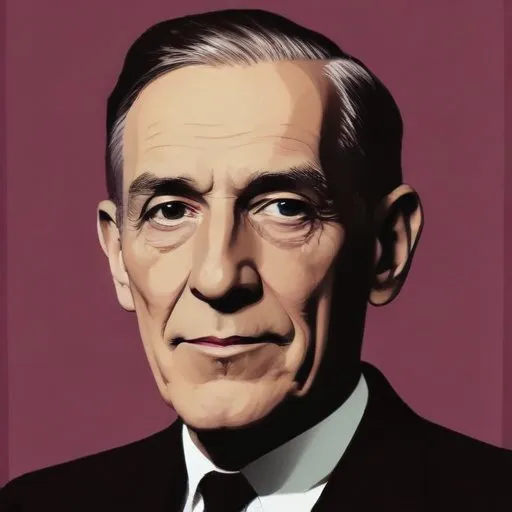
Robert Woodrow Wilson: The Astronomer Who Unveiled the Secrets of the Universe
A Nobel Laureate in Physics
Robert
Woodrow Wilson is renowned for his groundbreaking discovery of cosmic microwave background radiation (CMB), a fundamental concept in modern astrophysics. Alongside
Arno Allan Penzias, Wilson's findings in 1964 provided critical evidence for the Big Bang theory, earning them the Nobel Prize in Physics in 1978.
Early Life and Education
Born on January 10, 1936, in Houston, Texas, Wilson graduated from Lamar High School and later pursued his undergraduate degree at Rice University. He was inducted into the Phi Beta Kappa society, a testament to his academic excellence. Wilson then earned his PhD in physics from the California Institute of Technology, where he was mentored by esteemed professors John Bolton and
Maarten Schmidt.
Discovery of Cosmic Microwave Background Radiation
Wilson's most significant contribution to science came when he and Penzias conducted experiments at Bell Labs in Holmdel Township, New Jersey. Using the Holmdel Horn Antenna, they detected a persistent source of noise in the atmosphere, which they initially couldn't explain. After eliminating all potential sources of interference, including pigeon droppings on the antenna, they identified the noise as CMB. This breakthrough discovery served as substantial evidence for the Big Bang theory, revolutionizing our understanding of the universe.
Carbon Monoxide Observations and Contributions to Astrophysics
In 1970, Wilson led a team that made the first detection of a rotational spectral line of carbon monoxide (CO) in an astronomical object, the Orion Nebula. This discovery paved the way for CO observations to become the standard method of tracing cool molecular interstellar gas. The detection of CO has since been a foundational event in the fields of millimeter and submillimeter astronomy.
Awards and Honors
Wilson's remarkable contributions to astrophysics have been recognized with several prestigious awards, including the:
- 1978 Nobel Prize in Physics (shared with Arno Allan Penzias)
- 1977 Henry Draper Medal of the National Academy of Sciences (shared with Arno Allan Penzias)
- 1987 Golden Plate Award of the American Academy of Achievement
Career Highlights and Later Life
Wilson remained at Bell Laboratories until 1994, when he was appointed as a senior scientist at the Harvard-Smithsonian Center for Astrophysics in Cambridge, Massachusetts. He has been a resident of Holmdel Township, New Jersey, and has been married to Elizabeth Rhoads Sawin since 1958.
Legacy and Impact
Robert Woodrow Wilson's pioneering work has had a profound impact on our understanding of the universe. His discovery of CMB and CO observations has opened doors to new areas of research, shaping the course of modern astrophysics. Wilson's contributions serve as a testament to human curiosity and the boundless potential of scientific inquiry.
FAQ
What is Robert Woodrow Wilsons Nobel Prize in Physics?
Robert Woodrow Wilson was awarded the Nobel Prize in Physics in 1978 for his discovery of cosmic microwave background radiation.
What is Robert Woodrow Wilsons role in the discovery of dark matter?
Robert Woodrow Wilson played a key role in the discovery of dark matter, which is a type of matter that does not emit or reflect light.
What is Robert Woodrow Wilsons work on the cosmic microwave background?
Robert Woodrow Wilsons work on the cosmic microwave background has helped to establish the Big Bang theory of the universes origin.
What is Robert Woodrow Wilsons relationship with Arno Penzias?
Robert Woodrow Wilson collaborated with Arno Penzias on the discovery of cosmic microwave background radiation, and the two scientists were awarded the Nobel Prize together.
What is Robert Woodrow Wilsons legacy in astronomy?
Robert Woodrow Wilson has left a lasting legacy in astronomy, having made significant contributions to our understanding of the universes origins and nature.