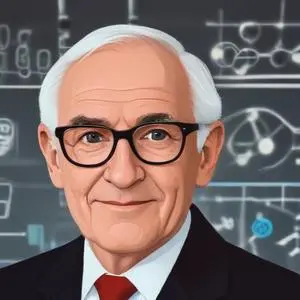
Rodney Robert Porter: The Biochemist Behind the Nobel Prize
Unraveling the Secrets of Antibodies
Rodney Robert Porter, a renowned British biochemist, is best known for his groundbreaking work on the chemical structure of antibodies, earning him the Nobel Prize in Physiology or Medicine in 1972. His pioneering research illuminated the mysteries of the immune system, paving the way for significant advancements in immunology and medicine.
Early Life and Education
Born on October 8, 1917, in Newton-le-Willows, Lancashire, England, Porter was the son of Joseph Lawrence Porter, a chief clerk at the Railway Carriage and Wagon Works, and his wife,
Isabel May Reese. He received his early education at Ashton-in-Makerfield Grammar School, laying the foundation for his future success.
Academic Pursuits and War Service
Porter obtained his Bachelor of Science degree in Biochemistry from the University of Liverpool in 1939. However, his academic pursuits were interrupted by World War II, during which he served as a 2nd Lieutenant in the Royal Engineers, seeing action in Sicily and North Africa. In 1944, he was promoted to Major and transferred to the Royal Army Service Corps, working as a War Department analyst in Naples, Italy.
The Cambridge Connection
After the war, Porter moved to the University of Cambridge, where he became Fred Sanger's first PhD student. He earned his doctorate in 1948, marking the beginning of a fruitful academic career.
Career Highlights and Major Works
Porter's illustrious career spanned over three decades, with notable affiliations with the National Institute for Medical Research (1949-1960), St. Mary's Hospital Medical School, Imperial College London (1960-1967), and the University of Oxford (1967-1985). During this period, he made significant contributions to the field of immunology, including his seminal work on the chemical structure of antibodies.
The Nobel Prize and Legacy
Porter's Nobel Prize in Physiology or Medicine in 1972, shared with Gerald M. Edelman, was a testament to his pioneering work on the structure of antibodies. His research using the enzyme papain to break down immunoglobulins into fragments, making them easier to study, has had a lasting impact on our understanding of the immune system.
Awards and Honors
Throughout his career, Porter received numerous accolades, including the Gairdner Foundation International Award (1966) and election as a Fellow of the Royal Society (1964). He was also appointed Whitley Professor of Biochemistry at the University of Oxford and Fellow of Trinity College, Oxford.
Personal Milestones and Key Life Events
Porter's life was marked by significant personal milestones, including his marriage and the birth of his children. Despite his many achievements, he remained humble and dedicated to his work, inspiring future generations of scientists.
Influence on Modern Society
Porter's work has far-reaching implications for modern medicine, paving the way for the development of new treatments and therapies. His legacy continues to inspire scientists and researchers, driving innovation and discovery in the field of immunology.
Philosophical Contributions and Beliefs
Porter's work embodies the pursuit of scientific knowledge and understanding, driven by a passion for discovery and a commitment to improving human life. His contributions to the field of immunology are a testament to the power of human curiosity and ingenuity.
Personal Relationships and Anecdotes
Porter's colleague, Elizabeth Press, worked closely with him throughout his career, making significant contributions to the research that led to the Nobel Prize. Their collaboration is a testament to the importance of teamwork and collaboration in scientific discovery.
Historical Context and Legacy
Porter's work is set against the backdrop of significant scientific advancements in the mid-20th century, including the discovery of the structure of DNA and the development of molecular biology. His legacy continues to shape our understanding of the immune system, driving innovation and discovery in the field of immunology.
FAQ
What was Rodney Robert Porters Nobel Prize-winning research?
Rodney Robert Porter was awarded the Nobel Prize in Physiology or Medicine in 1972 for his discovery of the structure and function of antibodies. His work revolutionized the field of immunology and paved the way for major advances in disease diagnosis and treatment.
What was Rodney Robert Porters contribution to the field of immunology?
Porters research shed light on the complex mechanisms of the immune system, revealing the intricate relationships between antibodies, antigens, and immune cells. His work has had a profound impact on our understanding of the immune system and its role in human health and disease.
How did Rodney Robert Porters discoveries impact the development of disease treatments?
Porters discoveries have led to the development of numerous treatments for diseases, including vaccines, monoclonal antibodies, and immunotherapies. His work has saved countless lives and has improved the quality of life for millions of people worldwide.
What awards and honors did Rodney Robert Porter receive?
In addition to the Nobel Prize, Porter received numerous awards and honors for his work, including the Copley Medal, the Royal Medal, and the Gairdner Foundation International Award.
What is Rodney Robert Porters legacy in the field of immunology?
Rodney Robert Porters legacy is that of a pioneering scientist who has made fundamental contributions to our understanding of the immune system. His work has opened up new avenues of research and has improved human health, earning him a permanent place in the history of science.