


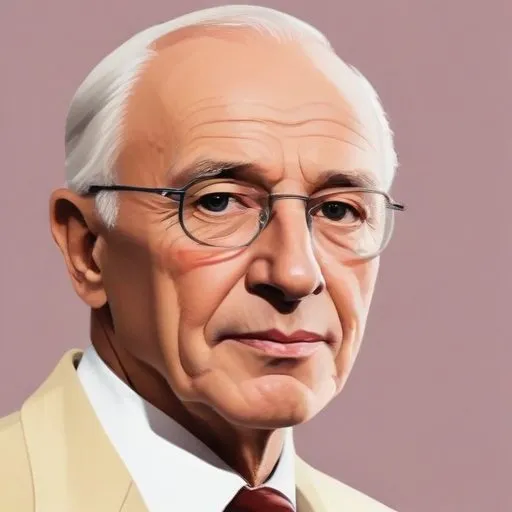
A renowned opera impresario who brought European opera to the American stage, revolutionizing the art form with his innovative productions and talent discoveries.
Rudolf Bing, the renowned Austrian-born British opera impresario, revolutionized the world of opera with his innovative approach and exceptional leadership. As the General Manager of the Metropolitan Opera in New York City from 1950 to 1972, Bing left an indelible mark on the institution, transforming it into a hub for world-class opera performances.
Born on January 9, 1902, in Vienna, Austria-Hungary, Bing grew up in a well-to-do Jewish family. His early years were marked by an apprenticeship at the prestigious Viennese bookshop of Gilhofer & Ranschburg, followed by a stint at Hugo Heller's theatrical and concert agency. Bing's passion for music and art history led him to study at the University of Vienna.
In 1927, Bing moved to Berlin, Germany, where he served as general manager of opera houses in the city and later in Darmstadt. During this period, he married Russian ballerina Nina Schelemskaya-Schlesnaya. The rise of Nazi Germany in 1934 prompted the Bings to relocate to the United Kingdom, where Bing became a naturalized British subject in 1946.
In the UK, Bing co-founded the Glyndebourne Festival Opera with Fritz Busch and Carl Ebert. This pioneering festival, which debuted in 1934, brought together top-notch artists and innovative productions, setting a new standard for opera performances. Following World War II, Bing co-founded and directed the Edinburgh International Festival in Scotland in 1947, further cementing his reputation as a visionary in the world of opera.
In 1949, Bing's talents took him to the United States, where he became the General Manager of the Metropolitan Opera the following year. Over the next 22 years, Bing oversaw a period of unprecedented growth and artistic excellence at the Met. He played a pivotal role in the company's move to its new home at Lincoln Center and presided over an era of creative flourishing, marked by iconic productions and legendary performers.
Sir Rudolf Bing's contributions to the world of opera are immeasurable. He was knighted in 1971 for his services to the arts. Throughout his illustrious career, Bing demonstrated an unwavering commitment to excellence, innovation, and artistic expression. His influence on the Metropolitan Opera continues to be felt, and his legacy remains a testament to the transformative power of opera.
As a tribute to his remarkable life and career, Sir Rudolf Bing's story serves as a beacon of inspiration for generations of opera lovers, artists, and enthusiasts alike.
Born in 1913
The 38th President of the United States, a former football star and lawyer, is known for being the first vice president to assume the presidency under the 25th Amendment and for his controversial pardon of Richard Nixon. He's also remembered for his humble and accidental rise to the presidency.
Born in 1913
The 37th President of the United States, a polarizing figure who led the country through significant domestic and foreign policy changes, infamous for his involvement in the Watergate scandal.
Born in 1918
A renowned musician who blended jazz, classical, and Broadway styles, creating iconic works like West Side Story, and inspiring generations with his charismatic performances and innovative compositions.
Born in 1906
Greek shipping magnate who built a massive fleet and married Jacqueline Kennedy, becoming a symbol of luxury and power. Known for his extravagant lifestyle and business acumen.
Born in 1923
A legendary soprano and actress renowned for her iconic opera performances and captivating stage presence, particularly in Verdi and Puccini roles.
Born in 1922
A renowned Italian opera singer and actress, celebrated for her powerful, expressive voice and iconic performances in Verdi and Puccini operas. Her legendary recordings remain widely admired today.
