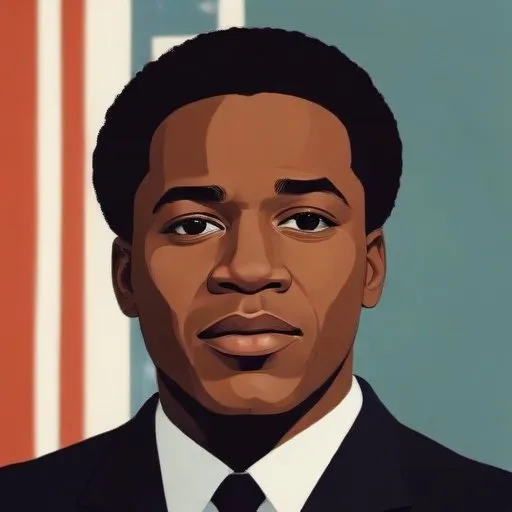
Sammy Younge Jr.: A Martyr of the Civil Rights Movement
A Life Cut Short, a Legacy that Lives On
Sammy Younge Jr. is remembered as the first African American university student to be murdered in the United States due to his actions in support of the Civil Rights Movement. His tragic death, at the hands of a white gas station attendant, sparked outrage and galvanized the movement, with the Student Nonviolent Coordinating Committee (SNCC) becoming the first civil rights organization to oppose the Vietnam War.
Early Life and Education
Born on November 17, 1944, in Tuskegee, Alabama, Younge grew up in a middle-class family. His father, Samuel Younge Sr., was an occupational therapist, and his mother was a local schoolteacher. From 1956 to 1958, Younge attended Cornwall Academy in Massachusetts, before graduating from Tuskegee Institute High School in 1962. After high school, he joined the United States Navy, serving for two years until his medical discharge in July 1964, due to the removal of one of his kidneys.
Following his discharge, Younge began attending the Tuskegee Institute, where he majored in political science. It was during his first semester that he became involved in the Civil Rights Movement, participating in the Selma to Montgomery protest march in March 1965.
Civil Rights Activism
Younge's involvement in the movement deepened as he joined the SNCC and the Tuskegee Institute for Advancement League (TIAL), a local civil rights student group formed with the help of the SNCC. He soon became a leader in the organization, helping to coordinate protests against civil rights injustices. On January 3, 1966, Younge's life was tragically cut short when he was shot and killed by a white gas station attendant, Marion Fitzpatrick, who refused to let him use a "whites-only" restroom.
A Legacy of Activism
Younge's death sparked widespread outrage, with SNCC becoming the first civil rights organization to oppose the Vietnam War, partly due to the similarities between the violence faced by innocent civilians in Vietnam and the violence faced by African Americans in the United States. His legacy as a martyr of the Civil Rights Movement continues to inspire generations of activists and social justice advocates.
Quotes and Memorable Sayings
- "I'd rather die on my feet than live on my knees." - Sammy Younge Jr.
Historical Context and Legacy
Younge's death occurred during a tumultuous period in American history, with the Civil Rights Movement gaining momentum and the Vietnam War escalating. His sacrifice served as a catalyst for the SNCC to reassess its priorities, ultimately leading to the organization's opposition to the war. Younge's legacy extends beyond his own life, inspiring countless individuals to engage in social activism and fight for human rights.
Awards and Honors
In recognition of his contributions to the Civil Rights Movement, the Tuskegee Institute has named a residence hall in his honor. Additionally, Younge's sacrifice is remembered annually on the anniversary of his death, January 3, as a symbol of the ongoing struggle for social justice.
FAQ
What was Sammy Younge Jr.s role in the Civil Rights Movement?
Sammy Younge Jr. was a civil rights activist who played a key role in the Student Nonviolent Coordinating Committee (SNCC) and the Southern Christian Leadership Conference (SCLC). He was involved in several high-profile protests and demonstrations, including the Montgomery Bus Boycott.
What was the circumstances of Sammy Younge Jr.s death?
Sammy Younge Jr. was tragically killed in 1966 at the age of 21 while participating in a protest in Tuskegee, Alabama. His death was a major catalyst for the Civil Rights Movement, and he was hailed as a martyr for the cause.
What was Sammy Younge Jr.s relationship with Martin Luther King Jr.?
Sammy Younge Jr. was a close associate of Martin Luther King Jr. and worked closely with him on several civil rights initiatives. King delivered the eulogy at Younges funeral and praised his courage and commitment to the movement.
What is Sammy Younge Jr.s legacy in the Civil Rights Movement?
Sammy Younge Jr.s legacy in the Civil Rights Movement is that of a passionate and dedicated activist who gave his life for the cause. He is remembered as a hero and a symbol of the sacrifices made by many during the movement.
How is Sammy Younge Jr. remembered today?
Sammy Younge Jr. is remembered today as a pioneering figure in the Civil Rights Movement. His story has inspired numerous books, articles, and documentaries, and he is celebrated as a hero and a symbol of the movements commitment to justice and equality.