


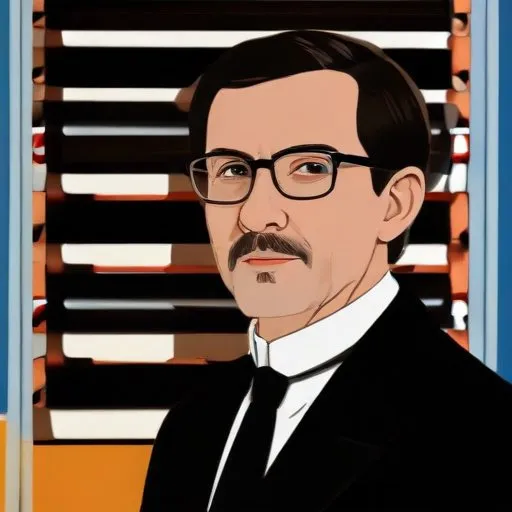
A renowned Baroque-era musician and teacher, known for his influential compositions and contributions to the development of the organ concerto.
Samuel Scheidt is renowned as one of the most influential German composers of the early Baroque era, leaving an indelible mark on the world of organ music. As a master organist and teacher, Scheidt's compositions continue to inspire and enchant audiences to this day, earning him the title of "The Father of German Organ Music."
Born on November 3, 1587, in Halle, Germany, Scheidt began his musical journey at a young age, studying in his hometown before traveling to Amsterdam to learn from the illustrious Dutch composer, Sweelinck. This pivotal experience had a profound impact on Scheidt's style, which would later come to define the new north German style of organ music.
Despite the turmoil of the Thirty Years War, Scheidt remained in Germany, adapting to the challenging circumstances by taking on smaller jobs and teaching positions. His determination and perseverance eventually paid off, as he was appointed Kapellmeister to the Margrave of Brandenburg and later became the musical director of three churches in Halle, including the prestigious Market Church.
Scheidt's music falls into two primary categories: instrumental music, featuring a vast array of keyboard compositions, and sacred vocal music, showcasing his mastery of a cappella and basso continuo techniques. His groundbreaking chorale preludes, characterized by a patterned variation technique, demonstrate his innovative approach to organ music.
Scheidt's contributions to the world of music extend far beyond his own compositions. As a pioneer of the north German style, he paved the way for future generations of composers, including the likes of J.S. Bach and Georg Philipp Telemann. His influence can be seen in the development of Protestant church music, as well as the broader landscape of Baroque music.
Today, Scheidt's music remains a staple of organ repertoire, with his compositions continuing to inspire and delight audiences around the world. As a testament to his enduring legacy, Samuel Scheidt is remembered as one of the most significant figures in the history of German organ music.
Born in 1585
A renowned Baroque composer and organist, known for his contributions to the development of the oratorio and passion genres, creating over 500 works that showcased his mastery of choral music.
Born in 1685
A master of Baroque music, he composed over 1,000 works, including orchestral suites, cantatas, and passions, that still inspire and influence musicians today. His innovative use of counterpoint and harmony raised the bar for classical music.
Born in 1685
A renowned Baroque composer and organist, famous for creating majestic orchestral suites, operas, and oratorios, including the iconic "Messiah" masterpiece.
Born in 1567
A Baroque music pioneer who revolutionized the opera and sacred music genres with innovative harmonies and orchestration, leaving an indelible mark on classical music.
Born in 1583
A renowned English organist and composer of the late Renaissance and early Baroque periods, known for his sacred choral music and madrigals. His works are still widely performed today.
