


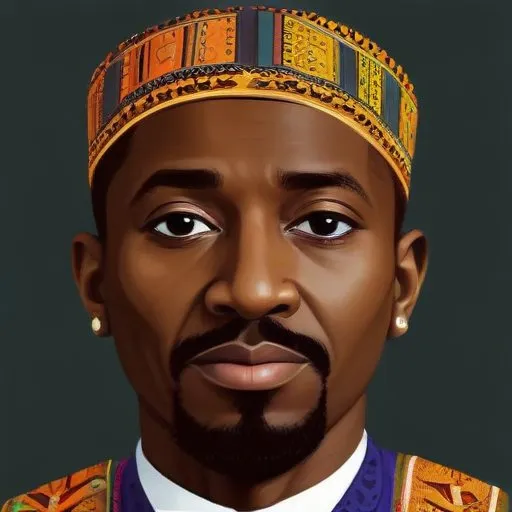
A Nigerian banker and royal who served as the Governor of the Central Bank of Nigeria, known for his anti-corruption efforts and economic reforms. He's also a prominent Islamic scholar and traditional monarch.
Sanusi Lamido Sanusi, also known as Khalifa Sanusi II Ajami, is renowned as the spiritual leader of the Tijanniyah Sufi order in Nigeria and the emir of the ancient city-state of Kano. As a prominent traditional and religious figure in West Africa, he has been a beacon of cultural reform and intellectual innovation, leaving an indelible mark on the region.
Born on July 31, 1961, in Kano, Nigeria, Sanusi hails from a ruling class Fulani family of the Sullubawa clan. He grew up in the palace of his great-uncle, Ado Bayero, who reigned for over five decades. His father, Aminu Sanusi, was a prince and diplomat who served as the ambassador to Belgium, China, and Canada, and later permanent secretary of the Ministry of Foreign Affairs.
Sanusi received both religious and secular education, culminating in a strong foundation in Islamic studies and a degree in Economics from the Ahmadu Bello University in Zaria, Nigeria. He further honed his academic prowess by obtaining a Master's degree in Economics from the University of London's School of Oriental and African Studies.
Prior to his accession to the throne, Sanusi was an Islamic intellectual, academic, political economist, and banker. He served as the Governor of the Central Bank of Nigeria from 2009 to 2014, introducing sweeping banking reforms that transformed the country's financial landscape.
During his reign as the emir of Kano, Sanusi has been a vocal advocate for cultural reform in Northern Nigeria. He has consistently spoken out against practices that hinder social and economic progress, such as child marriage and the lack of education for girls.
Sanusi's philosophical underpinnings are rooted in the teachings of the Tijanniyah Sufi order, which emphasize the importance of spiritual growth, self-purification, and social responsibility. He has often spoken about the need for Muslims to adopt a more nuanced understanding of Islam, one that is compatible with modernity and human rights.
Sanusi's contributions to Nigeria's development and his commitment to cultural reform have earned him numerous awards and honors, including:
Sanusi Lamido Sanusi's life and legacy serve as a testament to the power of vision, courage, and intellectual curiosity. As a leader, he has inspired countless individuals and institutions to strive for excellence and to work towards a more just and equitable society.
Through his tireless efforts, Sanusi has left an indelible mark on Nigeria and the world, cementing his place as one of the most influential figures in modern African history.
68 Years Old
The first president in Nigeria to originate from the minority ethnic group, he's known for his efforts to reform the country's electoral system and his handling of the Boko Haram insurgency.
89 Years Old
A Nigerian general and politician who served as the 5th President of Nigeria, known for his efforts to stabilize the country's economy and promote democracy. He's also known for his role in brokering peace in several African countries.
75 Years Old
The 13th President of Nigeria, a businessman-turned-politician who implemented reforms to stabilize the country's economy and promoted national unity. He's also known for his humble and simple lifestyle.
Born in 1904
First President of Nigeria, leading the country to independence from British colonial rule and shaping its early years as a sovereign nation.
Born in 1909
A Nigerian lawyer and politician who played a key role in the country's independence movement and was a strong advocate for democracy and education. He's also known for his efforts to develop Nigeria's economy and infrastructure.
91 Years Old
Led Nigeria through a tumultuous period, including a civil war, and implemented policies to unify the country. He's known for his efforts to rebuild and stabilize Nigeria after the war.
