


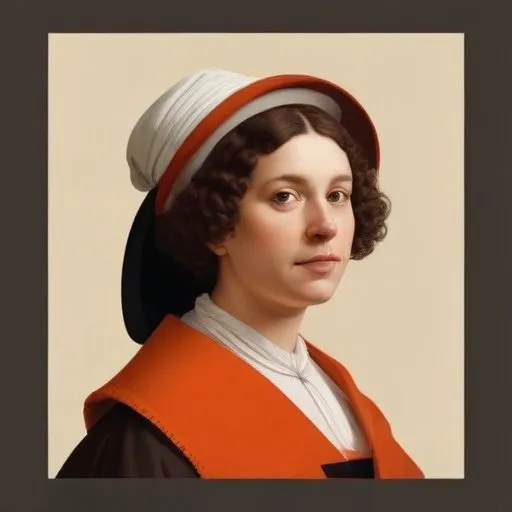
A 17th-century Dutch muse and homemaker, she inspired numerous artworks by her husband, a renowned painter, and managed his studio. Her enigmatic presence continues to fascinate art lovers.
Saskia van Uylenburgh, born on August 2, 1612, was the wife of the renowned Dutch painter Rembrandt van Rijn and his muse, serving as the inspiration and model for many of his paintings, drawings, and etchings. As the daughter of a prominent lawyer and mayor, Saskia's life was marked by tragedy, resilience, and a deep connection with the arts.
Saskia was born in Leeuwarden, Friesland, the youngest of eight children to Sjoukje Ozinga and Rombertus van Uylenburgh. Her life was shaped by the early loss of her parents, with her mother passing away in 1619 and her father five years later. She was then raised by her sister Hiskje and her husband, Gerard van Loo, a lawyer and secretary in the grietenij Het Bildt.
In 1631, Saskia traveled to Amsterdam, where she met Rembrandt, a young and ambitious painter. Rembrandt was immediately drawn to Saskia's beauty, elegance, and strong character, which inspired many of his works. Saskia became his model, and her features can be seen in many of his paintings, including the iconic "Saskia as Flora" and "Saskia with a Flowered Hat".
Saskia and Rembrandt were engaged in 1633, and they married on July 2, 1634, in Sint Annaparochie. The couple had three children, with only one son, Titus, surviving infancy. Saskia's life with Rembrandt was marked by both joy and hardship, as the couple faced financial struggles and personal losses, including the death of their two daughters.
Saskia's significance extends beyond her role as Rembrandt's muse. She played an important part in his artistic development, encouraging his experimentation with etching and oil painting. Her influence can be seen in many of Rembrandt's works, which often depicted her in various guises and personas. Saskia's legacy is a testament to the power of a strong and supportive partnership in the arts.
Saskia's life and legacy are deeply intertwined with that of her husband, Rembrandt. Together, they navigated the complexities of 17th-century Dutch society, where art, politics, and commerce were deeply intertwined. Saskia's influence on Rembrandt's work and his subsequent success have made her an integral part of art history.
Saskia van Uylenburgh's life was marked by both triumph and tragedy, but her legacy as Rembrandt's muse and inspiration has made her an enduring figure in the world of art.
Born in 1629
A Dutch master of domestic scenes, capturing intimate moments of everyday life in 17th-century Holland with remarkable light and atmosphere. His works offer a glimpse into the lives of ordinary people during the Dutch Golden Age.
Born in 1622
A Dutch master of light and shadow, known for his innovative use of chiaroscuro and his captivating, intimate portraits.
