


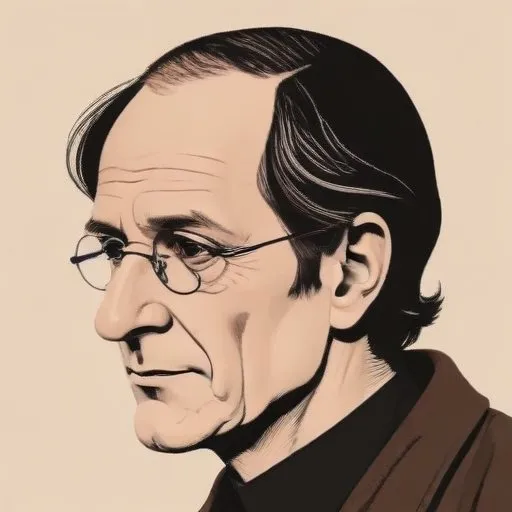
A 16th-century German musicologist and theologian who wrote extensively on music theory and composed hymns, contributing significantly to the development of Lutheran church music.
Sebald Heyden, a German musicologist, cantor, theologian, hymnwriter, and religious poet, is best known for his groundbreaking work, De arte canendi (On the Art of Singing), published in 1540, which revolutionized the teaching of singing to young boys and left an indelible mark on the realm of musicology.
Heyden's magnum opus, De arte canendi, comprising three installments, is considered a seminal work that has had a profound impact on the development of music education, solidifying his reputation as one of the earliest and most influential musicologists of his time.
Born on December 8, 1499, in Bruck, now part of Erlangen, to a family of Nuremberg patricians, Heyden's early life was marked by a strong emphasis on education.
He began his studies under the renowned music theorist Johannes Cochlaeus at the school of St. Lorenz in 1505, before pursuing his higher education at the University of Ingolstadt, where he earned his master's degree in 1519.
Heyden's professional journey commenced in 1519 as a cantor and later as rector at the Nuremberg Hospital School, where he nurtured the talents of his pupils, including the esteemed Nicholas Selnecker.
In 1525, he assumed the role of the first Lutheran rector of the school of St. Sebald, where he tirelessly worked to promote education, theology, and music, earning him a reputation as a devoted scholar and educator.
Heyden's numerous publications, including Salve regina and Adversus Hypocritas Calumniatores, demonstrate his expertise in theology and music theory, while his Formulae puerilium colloquiorum Nomenclatura (1527) became a highly acclaimed textbook, used extensively as a phrase book by students at the University of Krakow.
A prolific hymnwriter, Heyden's most celebrated work is the hymn O Mensch, bewein dein Snde gro (O man, bewail thy sins great), composed in 1530, which poetically reflects the sufferings of Christ in a tone of great passion.
Heyden's musical innovations and contributions have led some to speculate that he was, in fact, the world's first true musicologist, a notion that underscores his profound impact on the development of music education and scholarship.
Through his tireless efforts, Heyden has left an enduring legacy in the realms of musicology, education, and theology, influencing generations of scholars, musicians, and poets.
His work has had a lasting impact on the Lutheran Church, and his hymns continue to be sung and celebrated to this day, a testament to his enduring relevance and appeal.
In conclusion, Sebald Heyden's multifaceted contributions to musicology, education, and theology have solidified his position as a pioneer and a luminary of the Renaissance, ensuring his legacy will continue to inspire and educate future generations.
Born in 1483
A German monk and priest who sparked the Protestant Reformation, challenging Catholic Church authority and shaping Western Christianity. He's famous for nailing 95 theses to a church door, sparking a religious revolution.
Born in 1685
A master of Baroque music, he composed over 1,000 works, including orchestral suites, cantatas, and passions, that still inspire and influence musicians today. His innovative use of counterpoint and harmony raised the bar for classical music.
Born in 1585
A renowned Baroque composer and organist, known for his contributions to the development of the oratorio and passion genres, creating over 500 works that showcased his mastery of choral music.
Born in 1685
A renowned Baroque composer and organist, famous for creating majestic orchestral suites, operas, and oratorios, including the iconic "Messiah" masterpiece.
Born in 1809
A renowned 19th-century musician who masterfully blended classical and romantic styles, creating iconic works like the "Wedding March" and "Elijah" oratorio. His compositions continue to inspire and influence generations of artists.
Born in 1810
A renowned Romantic-era composer and influential music critic, known for his expressive and emotionally charged works, including symphonies, piano music, and art songs.
Born in 1833
A renowned pianist and composer, he crafted complex, expressive works that blended traditional and innovative techniques, leaving an indelible mark on classical music.
Born in 1813
A revolutionary composer who transformed opera with his epic, mythological works, creating a new era of musical storytelling. His iconic operas, such as "Der Ring des Nibelungen," continue to captivate audiences worldwide.
