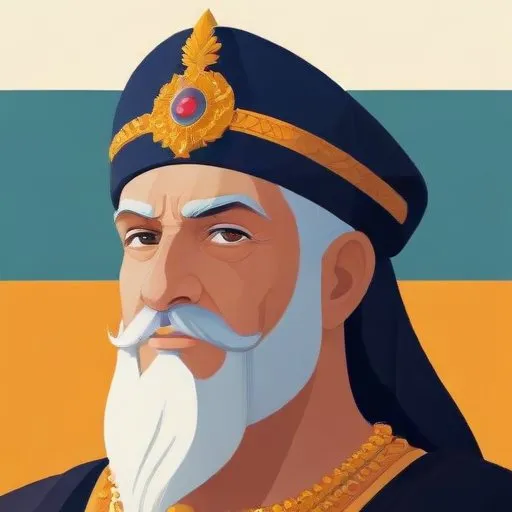
Shahrukh Mirza: The Illustrious Mughal Emperor
Known for His Military Prowess and Diplomatic Skills
Shahrukh Mirza, the fourth ruler of the Timurid Empire, is renowned for his military conquests and diplomatic prowess, which enabled him to expand the empire's territories and maintain peace during his reign from 1405 to 1447. He is particularly celebrated for his successful campaigns against the Mongols and the annexation of several provinces, including Iraq, Fars, and Kerman.
Early Life and Ascent to Power
Born in 1377, Shahrukh Mirza was the third son of Timur, the founder of the Timurid Empire. Following the death of his father, Shahrukh Mirza's brother, Pir Muhammad, was appointed as the successor. However, Shahrukh Mirza soon usurped the throne, and after a series of power struggles, he emerged as the ruler of the empire.
Military Campaigns and Conquests
Shahrukh Mirza's military prowess is reflected in his numerous campaigns against the Mongols, who had been a thorn in the side of the Timurid Empire. He successfully defeated the Mongols in several battles, including the Battle of Balkh in 1409 and the Battle of Khurasan in 1410. His military campaigns also led to the annexation of several provinces, including Iraq, Fars, and Kerman.
Diplomatic Achievements
Shahrukh Mirza was a skilled diplomat who maintained peaceful relations with neighboring kingdoms and empires. He formed alliances with the Chinese Ming dynasty and the Kingdom of Georgia, which helped to strengthen the Timurid Empire's economy and trade. He also patronized scholars, artists, and architects, which contributed to a cultural renaissance during his reign.
Infrastructure Development and Architectural Legacy
Shahrukh Mirza invested heavily in infrastructure development, including the construction of roads, bridges, and canals. He also commissioned several architectural projects, such as the construction of the Herat Citadel, the Mosque of Gawhar Shad, and the Mausoleum of Shah Rukh. These architectural wonders are testaments to the Timurid Empire's cultural and artistic achievements.
Personal Life and Family
Shahrukh Mirza was married to Gawhar Shad, a powerful and influential queen who played a significant role in the empire's administration. He had several sons, including Ulugh Beg, who succeeded him as the ruler of the Timurid Empire.
Legacy and Impact
Shahrukh Mirza's military conquests, diplomatic skills, and infrastructure development have left an enduring legacy. He is remembered as one of the most prominent rulers of the Timurid Empire, and his reign is often referred to as the "Golden Age" of the empire. His architectural projects have also had a lasting impact on the cultural and artistic heritage of Central Asia.
- Shahrukh Mirza's reign is often referred to as the "Golden Age" of the Timurid Empire.
- He was a patron of scholars, artists, and architects, which contributed to a cultural renaissance during his reign.
- He invested heavily in infrastructure development, including the construction of roads, bridges, and canals.
Trivia and Fun Facts
- Shahrukh Mirza was known for his generosity and patronage of scholars and artists.
- He was a skilled archer and horseman.
- He had a fascination with astronomy and mathematics.
FAQ
Who was Shahrukh Mirza?
Shahrukh Mirza was a 15th-century ruler of Persia and Transoxiana, born in 1377. He was the son of Timur, also known as Tamerlane, and succeeded his father as ruler in 1405.
What were Shahrukh Mirzas achievements?
Shahrukh Mirza expanded the Timurid Empire, conquering much of modern-day Iran, Afghanistan, and Central Asia. He also patronized the arts and architecture, commissioning many notable buildings and structures.
What was Shahrukh Mirzas relationship with his father?
Shahrukh Mirza had a complex relationship with his father, Timur. He was chosen as Timurs successor, but also faced opposition and rival claimants to the throne.
How did Shahrukh Mirza govern his empire?
Shahrukh Mirza governed his empire through a decentralized system, granting autonomy to local rulers and governors. He also maintained a strong military and administered justice through a network of judges and administrators.
What was Shahrukh Mirzas legacy?
Shahrukh Mirzas legacy is one of cultural and architectural achievement, as well as military conquest. He is remembered as a wise and just ruler, and his reign is often referred to as the Golden Age of the Timurid Empire.