


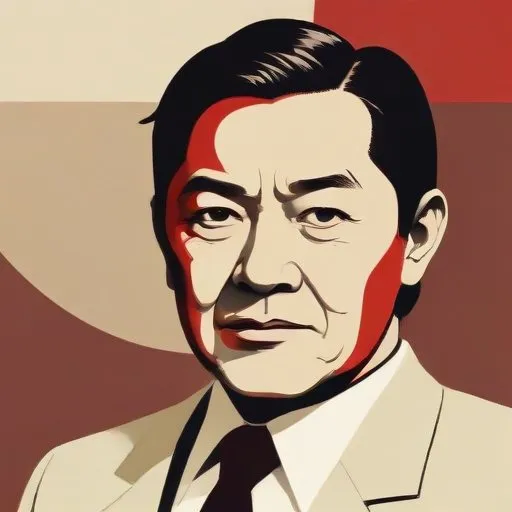
Pioneering entrepreneur who modernized Japan's economy by introducing Western business practices and founding numerous companies, including the first Japanese bank.
Shibusawa Eiichi is widely regarded as the father of Japanese capitalism, introducing Western capitalism to Japan after the Meiji Restoration. He revolutionized the country's economy by introducing double-entry accounting, joint-stock corporations, and modern note-issuing banks, earning him a reputation as a visionary industrialist.
In 1873, Shibusawa founded the First National Bank (Dai-Ichi Kokuritsu Ginko), Japan's first modern bank based on joint-stock ownership. This pioneering institution, now merged into Mizuho Bank, had the power to issue its own notes, marking a significant milestone in Japan's economic development. Through this bank, Shibusawa went on to found hundreds of other joint-stock corporations, many of which still thrive today as quoted companies in the Tokyo Stock Exchange.
Shibusawa's entrepreneurial spirit and commitment to modernization led to the establishment of several iconic institutions, including:
Despite being the founder of hundreds of corporations, Shibusawa refused to maintain a controlling stake in these companies, preventing the formation of a zaibatsu (a family-controlled conglomerate). This unusual approach earned him a unique distinction, as he was granted the title of Viscount, while other zaibatsu founders were awarded the title of Baron.
Shibusawa's philosophy centered around the importance of economic development, social responsibility, and education. He believed that economic growth should be balanced with social welfare and that education was key to Japan's modernization. His commitment to these principles earned him the respect and admiration of his peers and the Japanese people.
Shibusawa received several accolades for his contributions to Japan's economic development, including:
Shibusawa's legacy extends far beyond his numerous achievements. He inspired a generation of entrepreneurs and economists, shaping Japan's economic landscape and paving the way for its rapid growth and development. Today, his legacy continues to influence modern Japanese society, serving as a testament to the power of innovation, hard work, and vision.
As we reflect on Shibusawa Eiichi's remarkable life and achievements, we are reminded of his enduring impact on Japan's economy, society, and culture. His pioneering spirit, commitment to social responsibility, and contributions to education continue to inspire and motivate generations, solidifying his place as a true icon of Japanese capitalism.
Born in 1841
First Prime Minister of Japan, instrumental in modernizing the country and drafting its constitution, known for his role in transforming Japan from a feudal society to a modern nation.
Born in 1838
A prominent Japanese leader who served as Prime Minister twice, playing a key role in modernizing Japan's military and politics. He's known for his efforts to transform Japan into a major world power.
Born in 1828
Leader of the Satsuma Rebellion, a samurai who fought against the modernization of Japan, seeking to preserve traditional ways. He's known for his bravery and tragic demise.
