


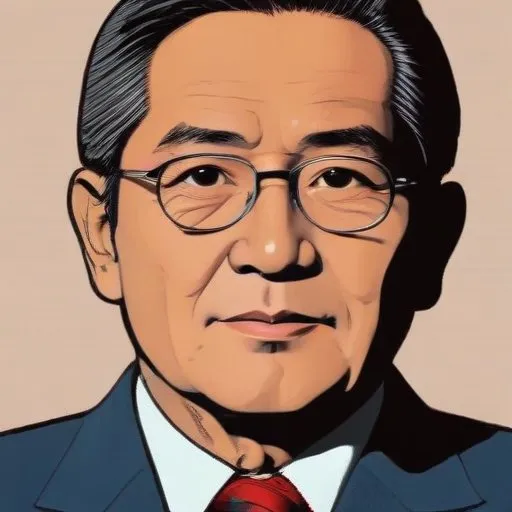
A post-WWII Japanese leader who played a crucial role in rebuilding and democratizing Japan, known for his efforts to restore relations with the West.
Yoshida's diplomatic career took him to Italy, where he served as ambassador from 1930 to 1932, and later to Britain, where he served as ambassador from 1936 to 1938. During this period, he worked tirelessly to de-escalate tensions between Japan and the Western powers, hoping to prevent the outbreak of war.
As Prime Minister, Yoshida oversaw the adoption of the Constitution of Japan and implemented a strategy of economic reconstruction while relying on an alliance with the United States for defense. This strategy, known as the Yoshida Doctrine, became the cornerstone of Japan's post-war foreign policy.
Yoshida's leadership was instrumental in negotiating the Treaty of San Francisco, which ended the American occupation and restored sovereignty to Japan. His vision for a peaceful and prosperous Japan continues to inspire generations of Japanese leaders and citizens.
Yoshida's leadership during a tumultuous period in Japanese history has left an indelible mark on the country's development. His commitment to democracy, pacifism, and international cooperation continues to shape Japan's foreign policy and inspire future generations of leaders.
Yoshida passed away on October 20, 1967, leaving behind a legacy of statesmanship and vision. His impact on modern Japanese society is a testament to his unwavering commitment to peace, prosperity, and international cooperation.
Born in 1872
A Japanese politician and diplomat who served as Prime Minister of Japan from 1924 to 1927, known for his efforts to improve relations with the West and promote international cooperation.
Born in 1899
The 58th Prime Minister of Japan, a key figure in Japan's post-war economic growth and international relations, known for his role in shaping the country's modern economy.
Born in 1901
A Japanese politician who served as Prime Minister from 1964 to 1972, known for his efforts to normalize relations with South Korea and winning the Nobel Peace Prize in 1974.
Born in 1905
The 67th Prime Minister of Japan, serving from 1976 to 1978, known for his efforts to improve Japan's relations with Southeast Asia and his role in normalizing Japan's relations with China.
