


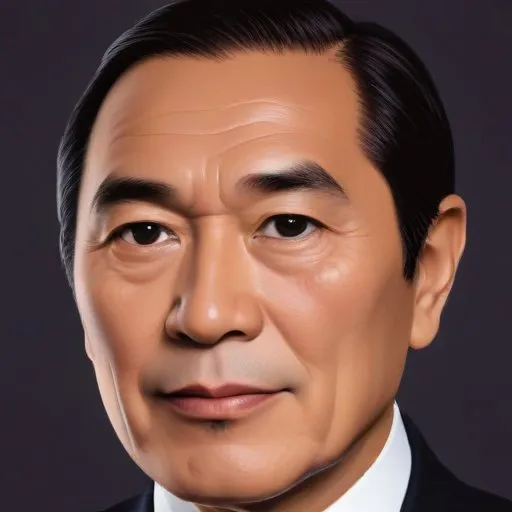
The 67th Prime Minister of Japan, serving from 1976 to 1978, known for his efforts to improve Japan's relations with Southeast Asia and his role in normalizing Japan's relations with China.
Takeo Fukuda, the 67th Prime Minister of Japan, is renowned for formulating the Fukuda Doctrine, a cornerstone of Japan's foreign policy that continues to shape the country's relations with its Asian neighbors. During his tenure from 1976 to 1978, Fukuda played a pivotal role in strengthening Japan's diplomatic ties, particularly with China, and is credited with promoting regional peace and stability.
Born on January 14, 1905, in Gunma Prefecture, Fukuda hailed from an esteemed samurai family. His academic prowess earned him a spot at Tokyo Imperial University, where he studied law and graduated in 1929. Fukuda's exceptional performance in the civil service examination led him to join the Ministry of Finance, where he rapidly rose through the ranks.
Fukuda's dedication and expertise in fiscal policy caught the attention of the Japanese government, and he was appointed as an adviser to the Wang Jingwei regime during the Pacific War. After Japan's surrender, Fukuda continued to serve as chief secretary and head of the Ministers' Secretariat. His leadership skills and experience paved the way for his entry into politics.
In 1952, Fukuda was elected to the House of Representatives, marking the beginning of his four-decade-long political career. As a member of the Liberal Democratic Party, he played a crucial role in shaping Japan's post-war foreign policy. Fukuda's rivalry with Kakuei Tanaka, dubbed the "KakuFuku War," became a defining aspect of his political life.
The Fukuda Doctrine, unveiled in 1977, emphasized Japan's commitment to peaceful coexistence, economic cooperation, and cultural exchange with its Asian neighbors. This doctrine not only fostered improved relations with China but also paved the way for Japan's emergence as a regional leader. Fukuda's diplomatic efforts culminated in the signing of the Treaty of Peace and Friendship between Japan and China in 1978.
Fukuda married Mie Arai, the granddaughter of a Supreme Court justice, and the couple had three sons and two daughters. His eldest son, Yasuo Fukuda, followed in his footsteps and served as Prime Minister of Japan from 2007 to 2008. Fukuda's family legacy is a testament to his enduring impact on Japanese politics.
Fukuda's foreign policy initiatives have had a lasting impact on Japan's relations with its Asian neighbors. His commitment to regional peace and stability has inspired generations of Japanese leaders, and his legacy continues to shape Japan's role in global affairs.
Takeo Fukuda's remarkable life and achievements serve as a testament to his dedication to Japan's growth and development. As a statesman, he played a pivotal role in shaping Japan's foreign policy, leaving behind a lasting legacy that continues to inspire future generations of Japanese leaders.
Born in 1910
The 68th Prime Minister of Japan, known for his efforts to revitalize the country's economy and reform its political system, leaving a lasting impact on Japan's modernization.
Born in 1911
The 70th Prime Minister of Japan, serving from 1980 to 1982, known for his efforts to revitalize the Japanese economy and improve international relations. He's also remembered for his humble and unassuming leadership style.
95 Years Old
A Japanese lawyer and politician who served as the 76th Prime Minister of Japan, known for his efforts to reform the country's political system and promote international cooperation. He played a key role in shaping Japan's post-Cold War foreign policy.
Born in 1919
Served as Prime Minister of Japan from 1991 to 1992, known for his efforts to revitalize the country's economy and his role in shaping Japan's post-Cold War foreign policy.
88 Years Old
A Japanese journalist-turned-politician who served as Prime Minister of Japan from 1993 to 1994, known for his efforts to reform the country's political system and economy.
Born in 1924
Japanese soldier-turned-politician who served as Prime Minister of Japan from 1994 to 1996, known for his apology for Japan's wartime atrocities and efforts to improve relations with neighboring countries.
